You have 0 items in your cart


Succession Planning Importance and Strategy Necessity
Succession planning is much like setting up a safety net for your company. Imagine, one day, a key player in your team – maybe even you – can no longer fill their role. What happens next? If you’re drawing a blank, that’s where succession planning swoops in, ensuring your business doesn’t hit a standstill.
In simple terms, succession planning is about identifying and developing new leaders who can replace old ones when they leave, retire, or are unable to continue in their position. It’s not just for big corporations but equally critical for small and family-owned businesses. Why? Because it’s about continuity, stability, and ensuring the growth doesn’t falter.
Getting straight to the heart of it, here are the quick beats of the corporate succession planning process:
- Identify Critical Positions: Know which roles are essential.
- Develop Success Profiles: Understand the skills and qualities needed.
- Assess Successors: Match potential leaders against these profiles.
- Create Development Plans: Prepare your next leaders.
- Identify Knowledge Loss Risks: Know what must be preserved.
- Capture At-Risk Knowledge: Hold onto critical insights.
- Develop Implementation Plan: Put your succession plan into action.
At the end of the day, your company’s resilience and adaptability hinge on how well you can navigate change. Succession planning isn’t just a strategy; it’s a necessity. It guarantees that your business not only survives but thrives, regardless of what the future holds.
Understanding Succession Planning
Succession Planning: At its core, succession planning is about preparing for the future. It’s a way for businesses to make sure that, no matter what happens, they have the right people ready to take over important roles. Think of it like a relay race where the baton is passed smoothly to the next runner without slowing down. In business, that baton is leadership, and the runners are your employees.
Why It’s a Business Strategy: Some folks might think of succession planning as a nice-to-have, kind of like an extra layer of insurance. But it’s much more than that. It’s a strategic move. Without it, a sudden departure of a key leader could leave a company scrambling, risking everything from employee morale to the very survival of the business. By identifying and developing future leaders, companies ensure that they remain strong, no matter the changes that come their way.
Leadership Roles: Leadership isn’t just about being at the top; it’s about vision, direction, and inspiration. In the context of succession planning, leadership roles are those positions critical to the success and continuity of the business. These can range from the CEO to other key positions that might not be as obvious but are just as vital. The goal is to ensure that these roles are always filled by people who are not only capable but are the right fit for the company’s future.
When we talk about the corporate succession planning process, we’re essentially discussing a comprehensive approach to identifying and developing new leaders who can replace old leaders when they leave, retire, or pass away. This process isn’t a one-time task but an ongoing strategy that evolves as the company and its workforce change. It involves understanding the roles that are crucial to the success of the business, identifying the skills and competencies needed to excel in those roles, and then matching potential leaders to those future needs.
In Practice: Imagine a company where the CEO is known for their visionary leadership and has been the driving force behind the company’s growth. The thought of them leaving might seem daunting. However, with a solid succession plan, the company has already identified potential candidates within the organization who share a similar vision and possess the leadership qualities needed. These individuals are being mentored, receiving the training they need, and are gradually taking on more responsibilities to prepare them for future leadership roles.
The Big Picture: Succession planning is about ensuring the long-term health and success of the business. It’s a way to safeguard the company’s legacy while also providing opportunities for growth and development for its employees. It’s a win-win strategy that keeps the business strong and its people engaged and motivated.
As we delve deeper into the nuances of the corporate succession planning process, it’s not just about filling positions. It’s about envisioning the future of your company and making strategic decisions today that will help realize that vision tomorrow. With MAH Advising PLLC’s expertise, companies can navigate this process effectively, ensuring a seamless transition of leadership that aligns with their long-term goals and values.
In the next section, we’ll explore the key steps involved in this process, starting with identifying the critical positions that are essential to your business’s success.
The Importance of Succession Planning
When we talk about succession planning, we’re essentially discussing the future of your business. It’s about ensuring business continuity, smoothing the leadership transition, and maintaining organizational stability. Let’s dive deeper into why each of these elements is crucial.
Business Continuity
Imagine your company without its key players. It’s like a ship without a captain. Without proper planning, the sudden departure of a leader can leave your business directionless, potentially leading to financial instability or even collapse. Corporate succession planning ensures that there’s always someone ready to take the helm, keeping the ship steady and on course.
Leadership Transition
Transitioning leadership is like passing a baton in a relay race. The smoother the handoff, the better the race outcome. A well-thought-out succession plan ensures that new leaders are prepared, understand their roles, and are ready to lead. This preparation minimizes disruptions and maintains the momentum towards achieving business goals.
Organizational Stability
Stability is the bedrock upon which businesses build their future. It’s about creating an environment where growth, innovation, and employee morale flourish. Succession planning plays a pivotal role here by ensuring that changes in leadership don’t lead to upheavals that can disrupt operations, customer relations, or employee productivity.
Corporate succession planning is not just a strategy but a necessity for safeguarding the future of your business. It’s about being prepared for the inevitable changes that come with time. With the guidance of experts like MAH Advising PLLC, businesses can navigate these transitions smoothly, ensuring that their legacy and vision continue to thrive through successive generations of leadership.
In the next section, we’ll explore the key steps involved in the corporate succession planning process, starting with identifying the critical positions that are essential to your business’s success.
Key Steps in the Succession Planning Process
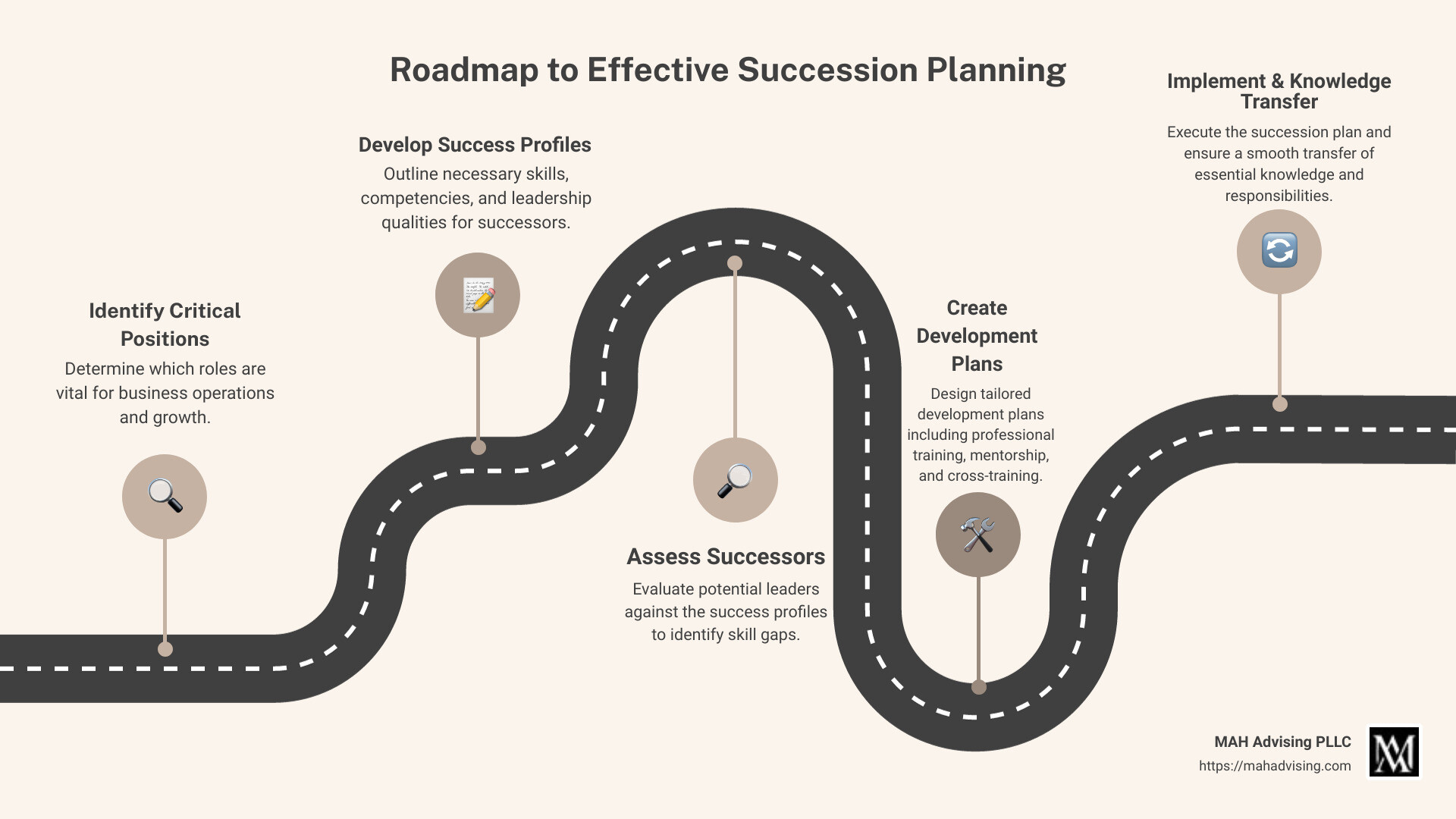
Succession planning is like preparing for a long journey. You need to know where you’re going, who’s going to help you get there, and what you need to pack. Let’s break down the roadmap for a successful corporate succession planning process.
Identify Critical Positions
Think of your organization as a puzzle. Some pieces are crucial to seeing the whole picture. These are your critical positions. They’re not just at the top; they could be anywhere in your organization but are vital for its smooth operation and growth. Identifying these roles is the first step. Ask yourself, Which positions, if left vacant, would significantly disrupt our business?
Develop Success Profiles
Now that you’ve pinpointed the critical roles, it’s time to sketch out what success looks like for each. This is where success profiles come into play. They’re detailed descriptions that include necessary skills, competencies, and leadership qualities. Think of them as the blueprint for the ideal candidate for each critical position.
Assess Successors Against Success Profiles
With your blueprints ready, it’s time to measure up potential leaders. This step involves evaluating internal or external candidates against the success profiles. You’re looking for skill gaps and training needs. It’s like matching puzzle pieces to see which fits best. Not everyone will be a perfect match initially, which is okay. This step helps you see who has the potential with the right development.
Create Development Plans
Found some promising candidates but noticed some gaps? Here’s where development plans come in. These are tailored training and growth strategies for each potential successor. They could involve professional development courses, mentorship, or cross-training. The goal is to bridge the skill gaps and prepare them for their future roles.
Knowledge Transfer
The final piece of the puzzle is ensuring the smooth transfer of knowledge. This step is crucial for maintaining continuity. It involves documenting processes and capturing institutional knowledge that might otherwise leave with the outgoing employee. Whether it’s through detailed process maps, knowledge inventories, or job aids, the aim is to make sure the organization doesn’t skip a beat when a transition occurs.
In summary, the corporate succession planning process is a strategic approach to ensure your business remains strong and capable, even as changes occur in leadership and critical roles. By following these key steps – identifying critical positions, developing success profiles, assessing successors, creating development plans, and transferring knowledge – you’re not just preparing for the future; you’re ensuring the resilience and continuity of your business. With the right plan in place, your organization can navigate transitions smoothly, keeping the legacy and vision alive through successive generations of leadership.
Moving forward, we’ll delve into the common challenges you might face in this process and how to overcome them, ensuring your succession planning is as effective as possible.
Common Challenges and Solutions in Succession Planning
Succession planning is not without its hurdles. Let’s explore some of the common challenges and the strategies to tackle them effectively.
Resistance to Change
The Challenge: One of the most significant barriers to effective succession planning is resistance to change. This resistance can come from current leadership, who may feel threatened by the process, or from employees who are wary of the uncertainty it brings.
The Solution: Communication is key. Start by explaining the benefits of succession planning, not just for the organization but for everyone involved. Highlighting stories of successful transitions, like McCormick & Co’s smooth CEO handover in 2008, can serve as powerful examples. Building a culture that values growth and development can also help mitigate resistance over time.
Identifying Potential Leaders
The Challenge: Finding the right candidates to fill leadership roles is easier said than done. It’s not just about identifying high performers; it’s about finding individuals whose vision aligns with that of the organization and who possess the necessary leadership qualities.
The Solution: Develop a robust assessment process that goes beyond current performance metrics. Use success profiles as a guide to evaluate potential leaders against the specific skills, competencies, and leadership qualities crucial for the role. Incorporating a variety of assessment methods, such as 360-degree feedback, behavioral interviews, and leadership development programs, can provide a more comprehensive view of each candidate’s potential.
Knowledge Capture
The Challenge: A significant risk during leadership transitions is the loss of institutional knowledge. Without a plan to capture this knowledge, organizations can find themselves struggling to maintain continuity.
The Solution: Implement a structured knowledge transfer process. This could involve documenting key processes, mentoring programs where outgoing leaders train their successors, and creating a central repository of critical information. Regularly updating this repository and ensuring it’s accessible to key personnel will help mitigate the risk of knowledge loss.
Real-World Example: Consider how a survey by HR Daily Review found that employees spent an average of 5 hours per week waiting to get in touch with colleagues who have the knowledge they need. This highlights the importance of effective knowledge capture and transfer strategies in minimizing disruptions and maintaining productivity.
By addressing these challenges head-on with clear strategies and a focus on communication, organizations can smooth the path for succession planning. The goal is not just to replace leadership but to ensure the continued success and growth of the organization. With careful planning and a commitment to developing internal talent, the corporate succession planning process can be a powerful tool for future-proofing your organization.
Frequently Asked Questions about Succession Planning
Succession planning can seem like a complex process, but it doesn’t have to be. Let’s break down some of the most common questions businesses have about this important strategy.
What makes a good succession plan?
A good succession plan is more than just a list of names to fill positions. It’s a comprehensive strategy that ensures the long-term success and stability of an organization. Here are the key components:
- Clearly Identified Critical Positions: Knowing which roles are essential for the functioning of your business is the first step.
- Developed Success Profiles: For each critical role, a detailed outline of required skills, competencies, and leadership qualities is essential.
- Assessment of Potential Successors: Matching internal or external candidates against these success profiles to identify the best fits.
- Tailored Development Plans: Creating specific plans for potential successors to address any skill gaps and prepare them for leadership roles.
- Ongoing Knowledge Transfer: Ensuring that critical institutional knowledge is documented and shared to maintain continuity.
A good plan also involves regular review and updates to reflect changes in the organization and its environment.
How often should succession plans be updated?
The corporate succession planning process is dynamic, not a one-time event. It should be reviewed and updated regularly—at least annually or whenever there are significant changes in the organization, such as new strategic directions, mergers, or acquisitions. This ensures that the plan remains relevant and aligned with the current and future needs of the business.
Can small businesses benefit from succession planning?
Absolutely. While succession planning is often associated with large corporations, small businesses have just as much—if not more—to gain from the process. Small businesses typically have fewer people to take over critical roles, making the impact of losing a key employee more significant. Succession planning can help small businesses:
- Identify and Develop Talent: Recognizing potential leaders within the organization and providing them with growth opportunities.
- Ensure Business Continuity: Preparing for the unexpected to minimize disruptions.
- Protect Legacy and Values: Ensuring that the business continues to operate in line with the founder’s vision.
In conclusion, whether you’re a multinational corporation or a small local business, the principles of effective succession planning apply. It’s about ensuring the resilience and longevity of your organization. At MAH Advising PLLC, we understand the unique challenges and opportunities that come with succession planning. Our tailored solutions are designed to help your business not just survive but thrive through transitions, securing its legacy for the future.
Michael Hurckes: Succession Planning to Future-Proof Your Business
In the journey of mastering the corporate succession planning process, we’ve explored the significance of preparing for leadership transitions, the steps involved in identifying and developing future leaders, and the challenges that may arise. But what ties all these elements together is the ultimate goal: future-proofing your organization. This isn’t just about filling positions; it’s about ensuring the continuous growth, stability, and adaptability of your business in an ever-changing landscape.
At MAH Advising PLLC, our commitment is to provide you with tailored solutions that align with your unique needs and objectives. We understand that each organization has its own culture, goals, and challenges. That’s why our approach to succession planning is not one-size-fits-all. We work closely with you to understand the intricacies of your business and develop a comprehensive strategy that ensures a seamless transition of leadership, preserves institutional knowledge, and maintains organizational continuity.
Succession planning is an investment in your organization’s future. It’s about creating a resilient foundation that can withstand the test of time and changes in leadership. With our expertise and personalized approach, we can help you navigate the complexities of the corporate succession planning process. Our goal is to empower your organization to not only survive but thrive in the face of transitions, securing its legacy and ensuring its success for generations to come.
The future of your business is too important to leave to chance. Let us at MAH Advising PLLC guide you through the process of developing a robust succession plan, tailored to your unique needs and aspirations. Together, we can secure the future of your organization, making it resilient, adaptable, and prepared for whatever lies ahead.
For more information on how we can assist you in future-proofing your organization through effective succession planning, please contact us. Let’s ensure the longevity and success of your business together.