You have 0 items in your cart


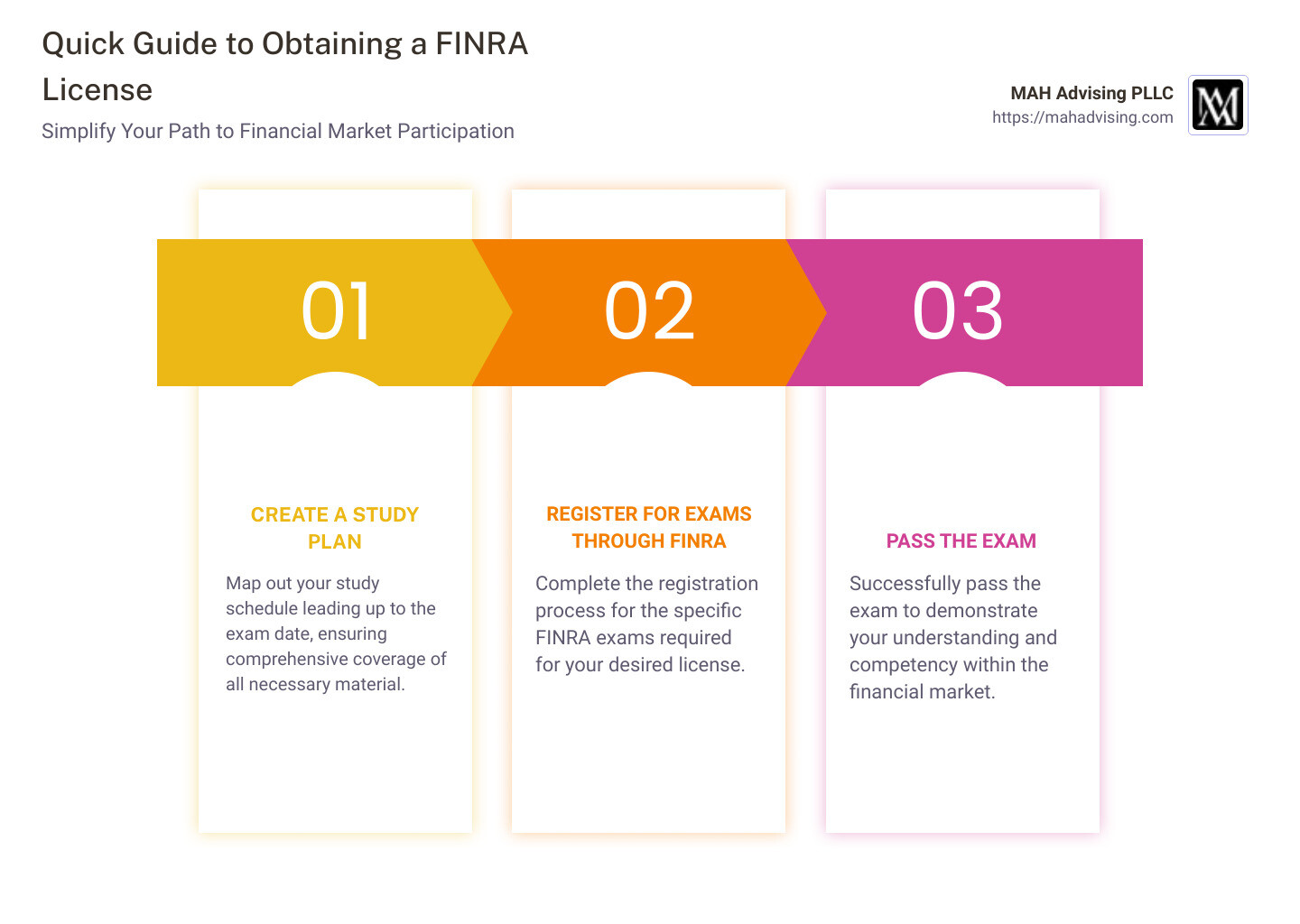
Quick Guide to Obtaining a FINRA License:
– Who Needs One: Professionals in the finance industry looking to participate in US markets.
– Types of Licenses: Series 6, Series 7, Series 63, among others.
– Main Steps:
1. Create a Study Plan
2. Register for Exams through FINRA
3. Pass the Exam
– Benefits: Compliance with US state and federal laws, career advancement, investor trust.
Are you feeling overwhelmed by the thought of getting your FINRA license? Wondering where to even start or why it’s essential for your career in the finance industry?
Obtaining a Financial Industry Regulatory Authority (FINRA) license can seem daunting, but it’s a vital step for anyone looking to make a significant impact in the US financial markets. Whether you’re aiming to advise on investments, sell securities, or just understand the comprehensive landscape of the financial industry, a FINRA license acts as your entry ticket.
In its simplest terms, FINRA ensures that anyone who sells financial products or gives financial advice holds the knowledge, skills, and ethics to do so correctly and responsibly. The variety of licenses available, such as the Series 7, Series 63, or Series 65, each serve different roles within the industry, from selling particular types of securities to providing advice on investments.
Before diving into the depths of studying for the exams and navigating the registration process, let’s demystify what the FINRA license entails, its importance, and how it can elevate your career in the finance sector.
Understanding FINRA and Its Importance
FINRA’s Role in the Financial Industry
The Financial Industry Regulatory Authority (FINRA) is like the guardian of the galaxy for the U.S. financial markets. It’s not just another organization; it’s the one that ensures everything in the finance sector runs smoothly, fairly, and with integrity. At its core, FINRA is responsible for overseeing one critical aspect of the financial industry: making sure that everyone who sells securities products or offers financial advice is qualified, knowledgeable, and operates under the highest standards of ethical conduct.
Why does this matter to you? Whether you’re aspiring to step into the finance world or you’re an investor looking to make informed decisions, FINRA’s oversight gives you a layer of protection and trust that’s indispensable in today’s fast-moving markets.
Investor Protection
One of the pillars of FINRA’s mission is to protect investors from fraud and wrongdoings. How do they achieve this? By rigorously testing and licensing professionals who wish to engage with the public. This process ensures that only those with the necessary knowledge and ethical standards can offer financial advice or sell securities. For investors, this means peace of mind knowing that they’re dealing with professionals who are up to date on the latest regulations and best practices.
Market Integrity
FINRA’s role doesn’t stop at licensing. It extends into maintaining the integrity of the securities markets. Through comprehensive monitoring and regulation, FINRA helps to prevent market manipulation, insider trading, and other practices that could harm the market’s fairness and efficiency. For anyone working in finance, understanding that they operate in a market governed by clear rules and oversight is crucial. It not only helps in maintaining a level playing field but also enhances investor confidence, which is essential for a healthy market environment.
The Importance of Compliance
For professionals in the finance industry, obtaining a FINRA license is not just a one-time event. It’s the beginning of a career-long commitment to compliance and education. FINRA requires licensed individuals to participate in Continuing Education (CE) programs to ensure they remain knowledgeable about changes in regulations and best practices.
Moreover, the Central Registration Depository (CRD) system maintained by FINRA is an essential tool for both the industry and its regulators. It’s a secure database that holds the registration records of broker-dealer firms and their associated individuals, facilitating the processing of form filings, fingerprint submissions, qualification exams, and continuing education sessions. This system is crucial for maintaining transparency and accountability in the industry.
In Summary
Understanding FINRA and its importance is key to navigating the finance industry successfully, whether you’re a professional seeking to advance your career or an investor looking for assurance in the integrity of the market. At MAH Advising PLLC, we’re committed to guiding our clients through the complexities of financial regulations, ensuring they meet their compliance obligations confidently and efficiently. By embracing FINRA’s standards, we all contribute to a market that’s fair, balanced, and inclusive, where everyone can invest with confidence.

Types of FINRA Licenses
In the financial industry, understanding the different types of FINRA licenses is crucial. These licenses allow professionals to perform various roles within the securities industry. At MAH Advising PLLC, we’re here to break down these licenses in simple terms. Let’s dive in:
Series 7 – General Securities Representative Exam
The Series 7 license is a must-have for anyone looking to become a general securities representative. It allows you to sell a wide range of securities products, including stocks, bonds, and mutual funds. Think of it as the key to entering securities sales.
Series 79 – Investment Banking Representative Exam
For those interested in investment banking, the Series 79 license is your gateway. This license focuses on advising on mergers and acquisitions, underwriting, and dealing with securities. It’s tailored for the investment banking sector.
Series 82 – Private Securities Offerings Representative Exam
The Series 82 license permits the holder to deal with private securities offerings. This is crucial for those who work with private placements and want to ensure they’re compliant with the necessary regulations.
Series 86/87 – Research Analyst Exam
For individuals passionate about conducting equity or debt securities research, the Series 86 and 87 exams are essential. These licenses ensure that analysts have the proper knowledge to provide well-informed recommendations.
Broker, Investment Representative, Securities Sales Agent
These roles are fundamental to the securities industry. A broker acts as a middleman between the buyer and the seller. An investment representative advises clients on their investment portfolios. A securities sales agent sells securities directly to investors. All these positions require appropriate FINRA licensing to ensure that the professionals are qualified and operate within ethical and regulatory standards.
At MAH Advising PLLC, we understand that navigating the path to obtaining the right FINRA license can seem daunting. But remember, each license serves as a building block for your career in the financial market. Whether you aim to advise clients on investments, handle securities sales, or dive into the specifics of investment banking, there’s a FINRA license tailored to your career aspirations.
We’re here to support you every step of the way, from choosing the right license to preparing for your exams. With our expertise, you can confidently embark on your journey in the financial industry, equipped with the knowledge and credentials to succeed.
Steps to Obtain Your FINRA License
Getting your FINRA license is a crucial step to launching your career in the financial industry. Whether you aim to be a broker, an investment representative, or a securities sales agent, the process involves a few key steps. Here at MAH Advising PLLC, we’re committed to making this journey as smooth as possible for you. Let’s break down the steps:
Step 1: Understand Your Licensing Requirements
First, identify which FINRA license fits your career goals. Whether it’s the Series 7 for general securities representation or the Series 79 for investment banking, each license has its own set of requirements and exams.
Step 2: Register for the Exam
Registration is initiated through the FINRA website. You’ll need to register for your specific exam, like the Series 7 or Series 63. The process is straightforward and involves providing your personal and professional details.
Step 3: Prepare for the Exam
The key to success is preparation. Utilize online courses, study materials, and practice tests to get ready. For example, the Series 7 exam is known for its medium to hard difficulty level, but with the right preparation, including practice tests, you can increase your chances of passing on your first try.
Step 4: Take the Qualification Exam
On exam day, arrive early, stay calm, and pace yourself through the questions. For exams like the Series 7, you’ll need to correctly answer 90 out of 125 questions to pass.
Step 5: Complete Your Continuing Education
Once you’ve passed your exam, your journey doesn’t end there. FINRA requires ongoing education to maintain your license. This ensures you stay up-to-date with industry standards and practices.
Step 6: Register with the CRD System
FINRA maintains a central licensing and registration system known as the Central Registration Depository (CRD). Registering here is essential for managing your license and fulfilling compliance obligations.
At MAH Advising PLLC, we understand that navigating through the FINRA licensing process can seem daunting. That’s why we’re here to help guide you through each step, ensuring you’re well-prepared to achieve your professional goals in the financial industry. With the right preparation and support, obtaining your FINRA license is an achievable milestone on your path to a successful career.
Preparing for the FINRA Exams
Preparing for FINRA exams is crucial to obtaining your finra license. The exams test your knowledge and understanding of important financial regulations, practices, and principles. Here’s how you can prepare effectively:
Study Materials
Start with the basics: Get your hands on comprehensive study guides that cover all the topics of the exam you’re preparing for. These materials break down complex concepts into manageable pieces. Understanding is key, not just memorization.
Online Courses
Leverage technology: Online courses offer structured learning paths and can be a great way to digest information in an interactive way. Platforms like ExamFX provide a variety of study aids from video lessons to simulated exams.
Practice Tests
Practice makes perfect: Going through practice questions and full practice tests is perhaps the most effective way to prepare. It helps you familiarize yourself with the exam format and identify areas where you need further review. Aim to complete as many practice questions as you can. The FINRA SIE Practice Test is a good place to start.
Exam Difficulty and Pass Rates
Know what you’re up against: Understanding the difficulty level of the exam and the pass rates can help set realistic expectations. For instance, the Series 7 exam is considered medium to hard, with a pass rate of 71%. You need to correctly answer 90 of 125 questions to pass. With this knowledge, you can tailor your study plan accordingly.
While preparing for the exams, it’s crucial to approach your studies with integrity. Any attempt to compromise the examination’s validity could lead to severe consequences.
At MAH Advising PLLC, we emphasize the importance of a strategic approach to studying. It’s not just about covering the material, but understanding the core principles and how they apply in real-world scenarios. We’re here to support you with personalized advice and resources tailored to your learning style.
By following a structured preparation plan that includes study guides, online courses, and plenty of practice, you’re setting yourself up for success on your FINRA exams—and taking a significant step towards your career in the financial industry.
Maintaining Your FINRA License
Keeping your FINRA license active is not a “set it and forget it” part of your career. It requires ongoing effort and education to stay compliant and effective in the financial industry. Let’s break down what you need to keep your license in good standing:
Continuing Education (CE)
The financial industry never stands still, and neither should your knowledge. Continuing education is a cornerstone of maintaining your FINRA license. This isn’t just busywork; it’s designed to keep you at the top of your game in ethics, regulatory changes, and industry practices. According to MAH Advising PLLC, staying updated through CE is crucial for providing the best service to your clients and staying compliant with regulatory standards.
Key Components of CE:
- Regulatory Element Training: Focus on staying current with compliance, regulatory requirements, and ethical standards.
- Products and Practices Requirement: Keep abreast of new products and investment strategies.
For more detailed info, dive into the NASAA’s IAR CE page.
CRD Updates
Your Central Registration Depository (CRD) record is basically your professional resume within the industry. It’s important to ensure that all information on it is accurate and up-to-date. Any changes in your employment status, disciplinary actions, or personal information need to be reflected here. This transparency helps maintain the integrity of the financial industry and your reputation within it.
FinPro
The Financial Professional Gateway (FinPro) is your go-to resource for accessing your registration and licensing information. Here, you can find details not just available through BrokerCheck® or the SEC’s Investment Adviser Public Disclosure database but also additional data like examination scores and continuing education credits. As emphasized by MAH Advising PLLC, this site is invaluable for managing your professional standing. If you need to check your record or update your information, head to FinPro.
BrokerCheck® and SEC’s Investment Adviser Public Disclosure
BrokerCheck® and the SEC’s Investment Adviser Public Disclosure databases are public-facing resources that clients and employers may use to verify your credentials and history. It’s wise to periodically review your profile on these platforms to understand what information about you is available to the public. Ensuring accuracy here can prevent misunderstandings and protect your professional reputation.
In summary, maintaining your FINRA license is an ongoing process that requires diligence and a commitment to professional development. By engaging in continuing education, keeping your CRD record up to date, and managing your public profiles on FinPro, BrokerCheck®, and the SEC’s Investment Adviser Public Disclosure database, you uphold the standards of the financial industry and contribute to its integrity. At MAH Advising PLLC, we’re here to guide you through every step of this process, ensuring you have the support you need to thrive in your career.
Frequently Asked Questions about FINRA Licenses
Navigating through the landscape of FINRA licenses can often raise several questions. To help you, we’ve compiled a list of some of the most frequently asked questions about FINRA certifications.
What is the cost of FINRA certification?
The cost of obtaining a FINRA certification varies depending on the specific license you’re aiming for. Here’s a quick breakdown:
- Series 79 – Investment Banking Representative Exam: $300 for a 2.5-hour exam .
- Series 82 – Private Securities Offerings Representative Exam: $60 for a 1.5-hour exam .
- Series 86/87 – Research Analyst Exam: Series 86 costs $225 for a 4.5-hour exam, and Series 87 costs $150 for a 1.75-hour exam .
These costs are part of the initial steps in your journey to becoming a certified financial professional.
Is it hard to get a FINRA license?
The difficulty of obtaining a FINRA license can vary widely depending on the specific exam and your background in the financial industry. For instance, the Series 7 exam, a common requirement for many financial positions, is considered to be of medium to hard difficulty. It has a pass rate of 71%, requiring candidates to correctly answer 90 of 125 questions to achieve a passing score of 72% . This information indicates that while challenging, with the right preparation, passing these exams is certainly achievable.
How does FINRA certification benefit my career?
Obtaining a FINRA certification can significantly benefit your career in multiple ways:
- Investor Trust: Being FINRA certified signals to potential clients and investors that you adhere to the highest standards of integrity and competence in the financial industry.
- Market Access: Certain financial activities and roles require specific FINRA licenses. Certification grants you access to these markets and opportunities.
- Career Advancement: FINRA certifications are often prerequisites for advanced positions within the finance sector. They can open doors to more prestigious and higher-paying roles.
At MAH Advising PLLC, we recognize the importance of these certifications in advancing your career. We’re committed to providing the guidance and support necessary for you to achieve your professional goals in the financial industry. From understanding the costs and challenges of obtaining your FINRA license to leveraging it for career advancement, we’re here every step of the way.
Michael Hurckes’ Conclusion: Elevating Trust with FINRA Certification
Achieving a FINRA certification is more than just adding another accolade to your professional portfolio. It’s about building trust with investors and paving the way for a successful career in the financial industry. As a guardian of market integrity, FINRA ensures that those holding its licenses adhere to the highest standards of ethical practice and regulatory compliance.
At MAH Advising PLLC, our commitment goes beyond the initial certification process. We understand the importance of maintaining your FINRA license and staying up-to-date with Continuing Education and the latest in CRD system updates. Our services are designed to keep you informed and compliant, ensuring that your career in the securities industry continues to thrive without interruption.
Navigating the complexities of FINRA certification can seem daunting. However, with the right partner, the journey can be rewarding. We pride ourselves on providing tailored solutions that address your specific needs, offering aggressive legal counsel, and being available 24/7 to guide you through every step of the process. Whether you’re looking to obtain your first FINRA license or ensuring your credentials remain current, we’re here to support your ambitions.
A FINRA certification does more than fulfill a regulatory requirement; it opens doors to new opportunities and positions you as a trusted professional in the financial market. The confidence it instills in your clients is invaluable, and the compliance obligations it entails are essential for maintaining the integrity and fairness of the securities industry.
For those looking to embark on this journey, or seeking to navigate the ongoing responsibilities that come with holding a FINRA license, we invite you to explore how we can support you through our regulatory exams services. Together, we can ensure that your career is not only compliant but also prosperous, fulfilling, and aligned with the highest standards of investor protection and market confidence.
Achieving and maintaining your FINRA license is a significant milestone in your financial career. Let us help you reach it with confidence.