You have 0 items in your cart


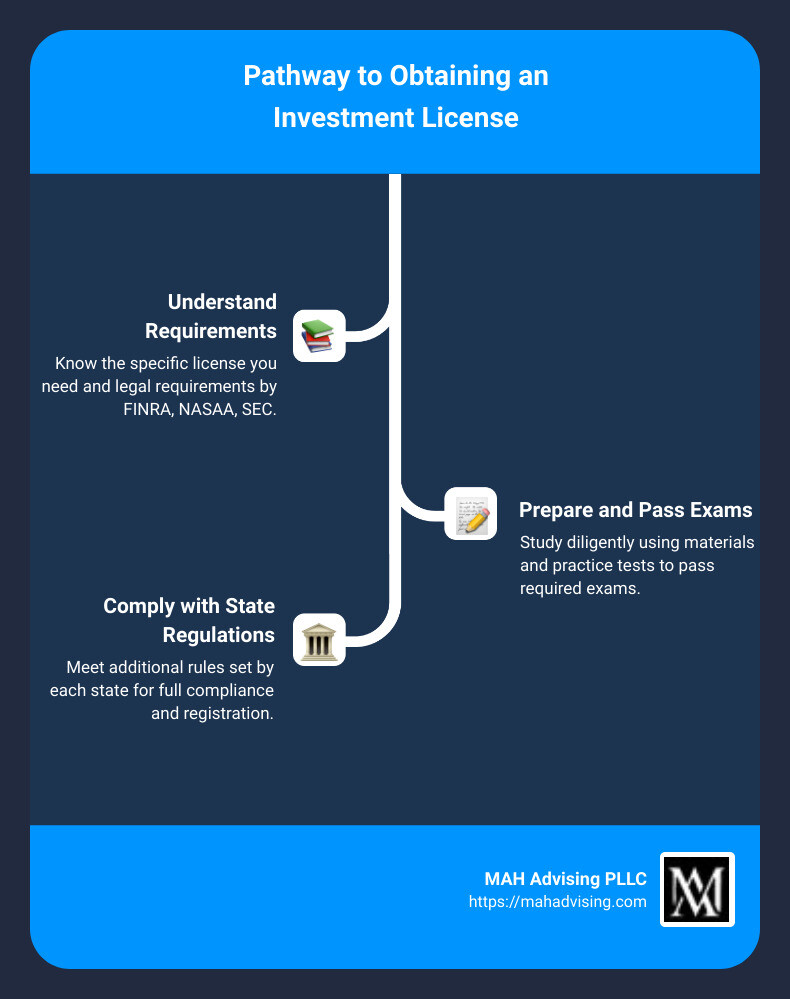
Quick Overview for Aspiring Investment License Holders:
- Understand the Types: Know the specific license you need (e.g., Series 7, Series 63).
- Legal Necessities: Be aware of FINRA, NASAA, and SEC requirements.
- Preparation is Key: Study and pass required exams.
- State Regulations: Each state might have additional rules.
Entering investments and securities is not as simple as opening a brokerage account and starting to trade. It requires a deep understanding of the market, strategic thinking, and above all, the right licensing. The importance of obtaining an investment license cannot be overstated for anyone looking to professionally engage in the buying, selling, or advising on securities. These licenses are not just pieces of paper; they are your entry ticket into the regulated world of finance, ensuring you have the necessary knowledge and adhere to ethical standards crucial for investor protection and market integrity.
The process begins with understanding the legal requirements set forth by governing bodies such as The Financial Industry Regulatory Authority (FINRA), the North American Securities Administrators Association (NASAA), and the Securities and Exchange Commission (SEC). Each of these organizations plays a crucial role in setting the standards and overseeing the conduct of finance professionals. Depending on your intended role within the industry, you might need different licenses, each designed to certify your expertise in specific areas of the financial market.
To guide you through your journey toward obtaining an investment license, this article lays down the fundamental building blocks, tailored specifically for those in legal dilemmas in New York or Florida who seek a firm grasp on their financial endeavors. We aim to equip you with the knowledge to navigate the complex landscape of investment licensing, highlighting its significance, the various types available, and the steps to acquire one.
Understanding Investment Licenses
When you’re diving into finance, knowing about investment licenses is like knowing the rules of the road before you start driving. It’s not just about avoiding fines or penalties; it’s about ensuring you’re providing the best and most ethical service possible.
Types of Licenses
There are several investment licenses, each tailored to specific roles within the financial industry. Here’s a quick breakdown:
- Series 6 allows you to sell mutual funds and variable annuities.
- Series 7 is the go-to for stockbrokers, giving you the ability to sell a wide range of securities.
- Series 63 covers state securities regulations.
- Series 65 and Series 66 are essential for financial planners and advisors.
- Series 79 and Series 99 cater to investment bankers and operations professionals, respectively.
Each of these licenses opens different doors in the financial world, from advising clients on their investment portfolios to facilitating major corporate financial transactions.
Regulatory Authorities
Three main bodies oversee the issuance and regulation of these licenses:
- FINRA (Financial Industry Regulatory Authority): They’re like the guardians of market integrity, ensuring that anyone selling securities or offering investment advice meets rigorous standards.
- NASAA (North American Securities Administrators Association): This group focuses on protecting investors at the state level, ensuring that financial professionals comply with local laws.
- SEC (Securities and Exchange Commission): They’re the federal overseers, ensuring that the entire securities market operates fairly and transparently.
Understanding the role of each regulatory authority is crucial. They don’t just hand out licenses; they ensure ongoing compliance and education, which helps maintain trust and integrity in the financial markets.
Why It Matters
Obtaining the right investment license isn’t just about legality; it’s about competence and trust. When you hold a license, you’re telling your clients, “I’ve met high standards of knowledge and ethics, and you can trust me with your investments.”
Moreover, each type of license serves as a key to different areas of the financial landscape. Want to help clients plan for retirement? You’ll likely need a Series 65 or 66. Dream of trading stocks? The Series 7 is your ticket.
The Path Forward
The journey to obtaining an investment license involves more than just passing an exam. It’s about choosing a path that aligns with your career goals, understanding the complex regulations that govern financial transactions, and committing to a career of integrity and continuous learning.
As we move into discussing the specifics of each license and how to prepare for the exams, remember: every step you take brings you closer to being a trusted advisor in the financial world.
Transitioning into the next section, we’ll dive into the specifics of each investment license, including the exams you’ll need to pass and the qualifications required. Whether you’re aiming for a Series 6 or a Series 79, we’ve got the insights to help you prepare and succeed.
Stay tuned as we explore the Specific Investment Licenses and Their Requirements next.
Preparing for the Securities Industry Essentials (SIE) Exam
Preparing for the Securities Industry Essentials (SIE) Exam is a critical step on your journey to obtaining an investment license. The SIE exam is the foundation for your career in the securities industry, testing your basic understanding of securities industry concepts. Let’s break down how to best prepare for this exam.
Study Materials
First things first, you’ll need the right study materials. There are a plethora of resources available, but it’s important to choose materials that cater to your learning style. From textbooks and online courses to flashcards and mobile apps, the variety is vast. Sources like MAH Advising PLLC offer comprehensive study packages that are tailored to cover all aspects of the SIE exam. Combining different types of materials can enhance your learning by reinforcing concepts through various modes of study.
Practice Tests
Practice tests are invaluable in your preparation toolkit. They not only familiarize you with the exam format but also help identify areas where you need further study. Taking multiple practice tests can track your progress and adjust your study plan accordingly. Websites like ExamFX offer practice tests that mimic the actual exam conditions, giving you a realistic sense of what to expect.
Exam Tips
- Understand, Don’t Memorize: Focus on truly understanding the concepts rather than memorizing facts. This will help you apply knowledge in different scenarios, which is often what the exam tests.
- Create a Study Schedule: Consistency is key. Create a study schedule that allows you to cover all the material without cramming. Include regular breaks and time for review.
- Join Study Groups: Engaging with peers who are also preparing for the SIE exam can provide additional insights and moral support. Explaining concepts to others is a great way to reinforce your own understanding.
- Take Care of Yourself: Don’t underestimate the importance of a good night’s sleep, proper nutrition, and physical activity. A healthy body supports a healthy mind, which is crucial for optimal performance on exam day.
- Familiarize Yourself with the Test Format: Knowing the structure of the exam will help you manage your time effectively during the test. The SIE exam consists of 75 multiple-choice questions to be completed in 1 hour and 45 minutes, including questions on various topics from the securities industry.

By following these strategies and utilizing the available resources, you’ll be well-prepared to tackle the SIE exam confidently. The goal is not just to pass the exam but to lay a solid foundation for your future in the securities industry.
Stay tuned as we explore the Specific Investment Licenses and Their Requirements next.
Specific Investment Licenses and Their Requirements
Navigating investment licenses can feel like trying to find your way through a maze. But don’t worry, we’re here to guide you through it. Let’s break down the specifics of each license, what they allow you to do, and their key requirements.
Series 6 License
What It Does: Allows you to sell mutual funds, variable annuities, and insurance premiums.
Key Requirements: Pass the Series 6 exam and the Securities Industry Essentials (SIE) exam. The Series 6 exam is 50 questions, and you need a score of 70% to pass.
Series 7 License
What It Does: Qualifies you to sell a broader range of securities products, including stocks, bonds, and options.
Key Requirements: Pass the Series 7 exam and the SIE exam. The Series 7 exam consists of 125 questions, and a passing score is 72%.
Series 63 License
What It Does: Allows you to solicit orders for any type of security in a particular state.
Key Requirements: Pass the Series 63 exam. This exam has 60 questions, and you need to score at least 43 correct answers to pass.
Series 65 License
What It Does: Enables you to offer financial advice and charge a fee for it.
Key Requirements: Pass the Series 65 exam. This test includes 130 questions, and you need 94 correct answers to pass.
Series 66 License
What It Does: Combines the Series 63 and Series 65 licenses, allowing you to act as both a securities agent and an investment advisor representative.
Key Requirements: Pass the Series 66 exam and hold the Series 7 license. The Series 66 exam has 100 questions, and you need a score of 73% to pass.
Series 79 License
What It Does: Qualifies you to advise on and facilitate debt and equity offerings, mergers and acquisitions, and business restructuring.
Key Requirements: Pass the Series 79 exam. This exam is focused on investment banking and consists of 75 questions, with a passing score of 73%.
Series 99 License
What It Does: Qualifies you to work in operations within a broker-dealer firm.
Key Requirements: Pass the Series 99 exam and the SIE exam. The Series 99 exam includes 50 questions, and you need a score of 68% to pass.
Each of these licenses serves as a stepping stone in your career in the financial industry. Depending on your career goals, you may need one or several of these licenses. Obtaining an investment license is not just about passing exams. It’s about demonstrating your commitment to professionalism, ethics, and continuous learning in the financial industry.
As you prepare for these exams, consider utilizing study materials, practice tests, and, if necessary, enrolling in prep courses. The investment of time and effort now can pave the way for a rewarding career in finance.
Next, we’ll delve into the state-specific requirements and registration process, ensuring you’re fully equipped to navigate the regulatory landscape of the securities industry.
State-Specific Requirements and Registration
When you’re diving into securities and aiming to get your investment license, it’s crucial to remember that each state in the U.S. has its own set of rules and regulations. This means that, in addition to passing your exams and meeting the requirements set by organizations like FINRA and NASAA, you’ll also need to navigate the specific requirements of the state where you plan to operate. Let’s break this down into digestible chunks: state securities laws, the registration process, and compliance.
State Securities Laws
Every state has a regulatory body, often referred to as the State Securities Board, which oversees securities transactions within its borders. These bodies enforce state-specific laws, known as “Blue Sky Laws,” designed to protect investors from fraud. The name “Blue Sky Laws” comes from the intent to prevent speculative schemes that have no more basis than so many feet of “blue sky.”
Key Takeaway: Before you start the process of obtaining an investment license, it’s wise to familiarize yourself with the Blue Sky Laws of the state(s) where you intend to operate. Each state’s securities board website is a goldmine of relevant information.
Registration Process
The process of registering as a securities professional varies from state to state. Generally, after passing the necessary FINRA or NASAA exams, you’ll need to register with the state securities board where you plan to conduct business. This might involve submitting an application, paying a fee, and sometimes, undergoing a background check.
Steps Simplified:
1. Check State-Specific Requirements: Some states might require additional exams or qualifications.
2. Submit Your Application: Include all necessary documentation.
3. Pay the Registration Fee: Fees vary by state.
4. Wait for Approval: This can take several weeks, depending on the state.
Compliance
Once you’re registered, compliance becomes your ongoing responsibility. State securities laws are not static; they evolve in response to new financial products and changing market dynamics. As a securities professional, you must stay informed about these changes to ensure you remain compliant.
Compliance Tips:
– Attend Continuing Education: Many states require ongoing education for securities professionals.
– Stay Informed: Regularly review updates from your state’s securities board.
– Seek Guidance When Needed: If you’re unsure about a regulation, it’s better to ask for clarification than to inadvertently violate a rule.
Remember: Compliance is not just about following the rules. It’s about protecting your clients and maintaining the integrity of the financial markets.
Keep in mind that obtaining and maintaining an investment license is a commitment to both professional excellence and ethical conduct. In the next section, we’ll address some of the most frequently asked questions about investment licenses, providing you with clear, concise answers to help you on your journey.
Steps to Apply for an Investment License
Obtaining an investment license is like preparing for a marathon; it requires understanding the course, rigorous preparation, and the right paperwork. Here’s how you can navigate the process:
Application Process
- Identify Your License Type: First things first, decide which investment license suits your career goals. Whether it’s Series 6, Series 7, or any other, each has specific requirements.
- Find a Sponsor: Most licenses, like Series 7, require sponsorship by a FINRA member firm. This means you need to be employed or have an offer from a firm that’s willing to back your application.
- Register for the Exam: Once you have a sponsor, they will help you register for the necessary exams through the FINRA website. This step officially kicks off your journey to licensure.
Documentation
- U4 Form: This is your application to become a registered representative. It includes personal information, employment history, and disclosures about past legal or financial issues.
- Sponsorship Confirmation: Your sponsoring firm will need to submit documentation confirming their sponsorship of your application.
- Educational Transcripts (if required): Some licenses may require proof of your educational background.
Fees
- Exam Fees: Each exam has a fee, which varies depending on the license. These fees are typically paid at the time of registration.
- Licensing Fees: Beyond the exam, there might be additional licensing fees required by your state or regulatory body.
- Continuing Education Fees: Maintaining your license will involve ongoing education, which also comes with its own costs.
Examination Scheduling
- Choose a Date: Once registered, you’ll select an exam date. Give yourself ample time to study but not so much that the information becomes stale.
- Location: Exams are held at authorized testing centers. You’ll choose a location that’s convenient for you.
- Preparation: Utilize study materials, online courses, and practice exams to prepare. The more you practice, the better your chances of passing on the first try.
Remember: The journey to obtaining an investment license is a marathon, not a sprint. It requires careful planning, dedication, and a willingness to learn and adapt. With the right approach, you’ll cross the finish line ready to embark on a rewarding career in the financial industry.
In the next section, we’ll dive into some of the most frequently asked questions about investment licenses to clear up any lingering doubts or confusion.
Frequently Asked Questions about Investment Licenses
Navigating investment licenses can feel like trying to find your way through a maze. But don’t worry, we’re here to guide you through some of the most common queries. Let’s dive in.
What Is an Investment License?
An investment license is like a key. It unlocks the door to buying, selling, and advising on securities. Think of securities as various forms of investments, like stocks or bonds. This key ensures that the person handling these investments knows what they’re doing and follows the rules. The Financial Industry Regulatory Authority (FINRA), along with other bodies like the SEC and NASAA, are the gatekeepers. They make sure only those who are qualified get this key.
Do I Need a License to Invest Other People’s Money?
In short, yes. If you’re planning to invest other people’s money, or offer investment advice, you need to be licensed. Why? Because it’s not just about knowing which stocks to pick. It’s about understanding the risks, the rules, and how to protect the people whose money you’re handling. It’s a big responsibility, and the license is proof that you’re up to the task.
What Requires a Securities License?
Here’s where it gets a bit more specific. Not all financial activities require a license, but many do. Here’s a quick rundown:
- Buying and selling securities (like stocks and bonds) on behalf of others.
- Offering investment advice for a fee.
- Managing investment portfolios.
Different activities require different types of licenses. For example, the Series 7 license allows you to sell a broad range of securities, while the Series 65 license is all about offering investment advice.
Each type of license has its own set of exams and requirements. It’s like choosing your character in a video game; each one has its own special abilities and missions. Choose the one that aligns with your career goals.
In summary, whether you’re dreaming of becoming the next big investment advisor or just looking to legally manage a friend’s portfolio, getting the right investment license is crucial. It’s not just about passing exams; it’s about building trust, protecting investors, and ensuring the integrity of the financial markets.
Keep these FAQs in mind. They’re the first step in understanding the importance of investment licenses in your financial career.
Secure Your Investment License with Michael Hurckes & MAH Advising
Navigating investment licenses can seem daunting at first. With various exams, regulations, and state-specific requirements, it’s easy to feel overwhelmed. That’s where we come in. At MAH Advising PLLC, we understand that each individual and business has unique needs. That’s why we offer tailored solutions to guide you through the process of obtaining your investment license.
We recognize that questions and concerns don’t adhere to a 9-to-5 schedule. That’s why we’re proud to offer 24/7 availability to our clients. Whether you’re burning the midnight oil studying for the Series 7 exam or you have a pressing question about state-specific registration on a Sunday afternoon, we’re here for you.
At the heart of our services is a commitment to not just meet, but exceed, your expectations. We’re not just a law firm; we’re your partner in navigating the complexities of the financial regulatory landscape. Our team of experts is dedicated to providing you with the knowledge, tools, and support you need to successfully obtain your investment license and advance your career.
Obtaining an investment license is more than just a regulatory hurdle; it’s a step towards building trust with your clients and ensuring the integrity of the financial markets. With MAH Advising PLLC by your side, you’re not just preparing for an exam; you’re preparing for a successful future in the financial industry.
For more information on how we can assist you with your investment license needs and to explore our comprehensive suite of broker-dealer compliance services, visit our FINRA Compliance page. Let us help you turn your professional aspirations into reality.