You have 0 items in your cart


FINRA Compliance: At its core, it’s about ensuring that financial firms and their representatives play by the rules to protect investors and maintain fair markets. If you’re exploring what FINRA compliance entails, you’re likely seeking to understand its role and the regulations it enforces in the securities industry.
FINRA, or the Financial Industry Regulatory Authority, serves as a guardian of market integrity. Compliance isn’t just a legal necessity—it’s a cornerstone for building trust with clients and maintaining a reputable business. From requiring proper registration and licensing for brokers to enforcing rules that protect against money laundering, FINRA creates a safer, more transparent environment for everyone involved in the financial markets.
Why is compliance important? Simply put, it keeps the whole system honest and sustainable. Ignoring FINRA’s regulations can lead to hefty fines, damaged reputations, or worse—being barred from the industry. For firms and their clients alike, navigating the landscape of compliance is non-negotiable for success and security in the financial world.
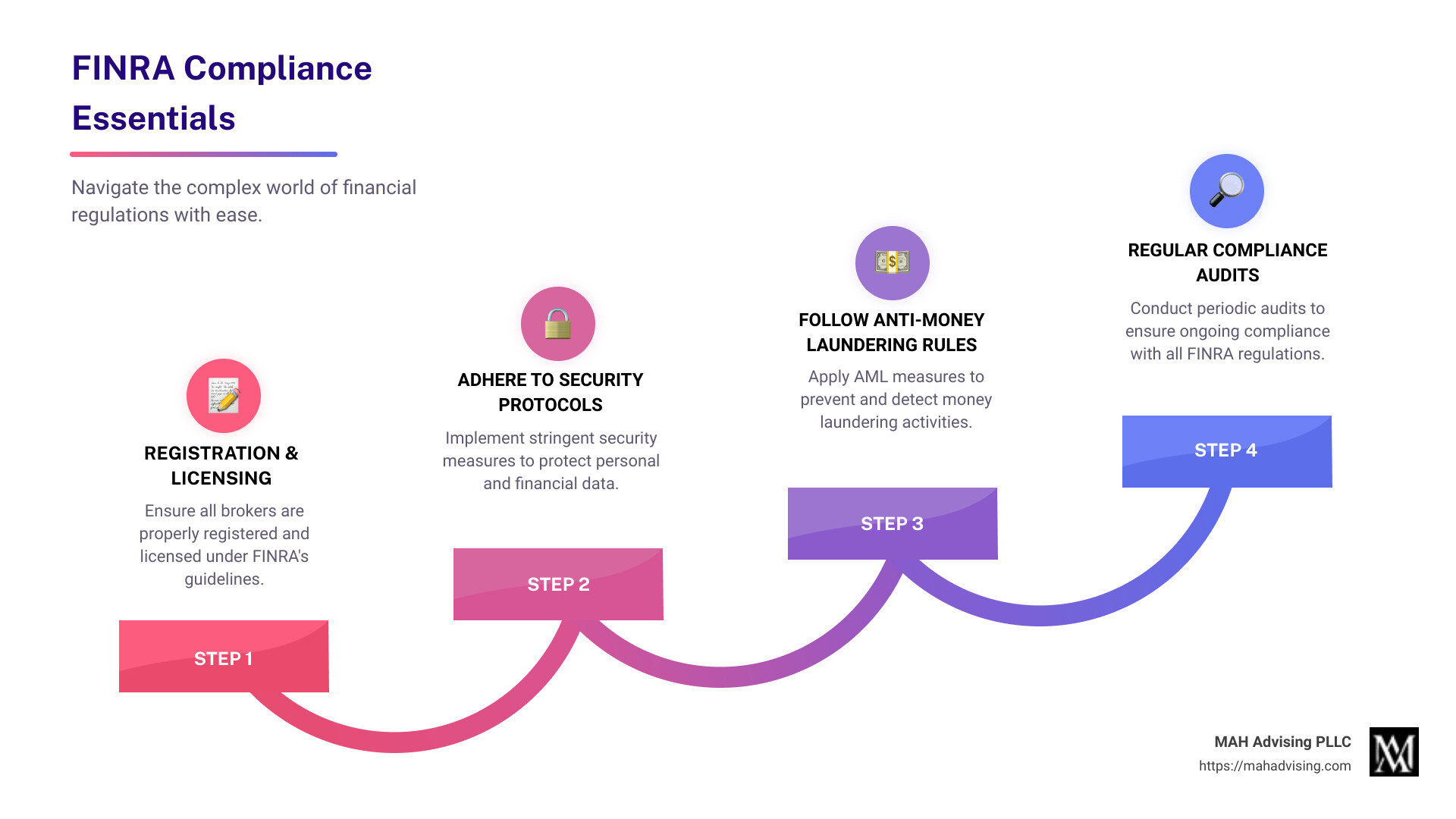
In this guide, brought to you by MAH Advising PLLC, we’ll dive deep into all things FINRA compliance—starting with the basics then moving into how you can ensure your firm remains on the right side of these regulations. It’s a journey well worth taking for those committed to excellence and integrity in the financial market.
What is FINRA Compliance?
In the financial industry, FINRA compliance isn’t just a set of rules to follow—it’s your firm’s promise to uphold the trust investors place in you. This commitment involves several key areas crucial for maintaining that trust and ensuring the markets operate fairly and efficiently. Let’s break it down into simpler terms.
Protecting PII
Personal Identifiable Information (PII) is like a treasure trove for criminals but is sacred to your clients. Ensuring it stays secure is non-negotiable. FINRA mandates stringent controls to safeguard this data, preventing it from falling into the wrong hands.
Financial Data Security
Your clients’ financial information is equally sensitive. Imagine it as the lifeblood of their future aspirations—buying a home, saving for college, or ensuring a comfortable retirement. Securing this data against breaches is not only a legal requirement but a cornerstone of maintaining client trust.
Electronic Correspondence
In our digital age, emails and electronic communications are the highways through which most financial information travels. FINRA requires that these highways are monitored and protected, ensuring that every piece of communication is retained, can be accounted for, and is secured against unauthorized access. This is where the finesse in managing vast quantities of data meets the ironclad necessity of compliance.
Data Loss Prevention
Loss of data isn’t just an inconvenience—it can be catastrophic. Imagine a scenario where critical financial records or sensitive client information simply vanish into thin air. FINRA’s regulations demand robust systems to prevent such occurrences, ensuring that data is not only backed up but is recoverable swiftly to maintain uninterrupted service and compliance.
Quick Insight
Think of FINRA compliance as the protective gear in a high-stakes game. It’s there to ensure that everyone plays by the rules, the game is fair, and everyone is protected—from the players (financial institutions and professionals) to the spectators (investors and the general public).
Navigating these regulations may seem daunting, but with the right tools and guidance, it’s entirely manageable. Tools like the FINRA Gateway offer a streamlined, efficient pathway to compliance, simplifying tasks such as registration, reporting, and responding to requests. It’s like having a GPS for the complex roadways of financial regulation .
In the next section, we’ll explore the overarching role and authority of FINRA, providing a clearer picture of its impact on the securities industry and why adherence isn’t just mandatory but beneficial for all parties involved. Stay tuned as we continue this journey, guided by the expertise of MAH Advising PLLC, to demystify FINRA compliance and empower your firm to thrive within these guidelines.
Understanding FINRA’s Role and Authority
When we talk about FINRA compliance, it’s like discussing the rules of the road for the financial industry. Just as traffic laws keep drivers safe, FINRA’s regulations protect investors and maintain a fair marketplace. Let’s break it down into simpler terms to understand the heavyweight roles FINRA plays in the financial arena.
SEC Oversight
Think of the U.S. Securities and Exchange Commission (SEC) as the ultimate referee in the securities industry. While FINRA operates on its own, the SEC keeps a watchful eye, ensuring that FINRA’s actions align with broader federal laws and protect investor interests. This relationship ensures a balance of power and an extra layer of protection for the market and its participants.
Broker Regulation
Brokers and brokerage firms are like the vehicles on our financial highways. For them to operate, they need a license, and that’s where FINRA comes in. By regulating these entities, FINRA ensures that only qualified and ethical professionals are dealing with your investments. They set the bar for who can enter the field and continue to monitor conduct to ensure everyone plays by the rules.
Securities Marketplace
Imagine a bustling market where buyers and sellers meet. FINRA ensures this marketplace runs smoothly, setting standards and practices that maintain integrity and fairness. Whether it’s through electronic systems or face-to-face transactions, FINRA’s regulations cover all bases to prevent fraud and manipulation, ensuring a reliable environment for trading.
Disciplinary Actions
No system is perfect, and violations occur. When rules are broken, FINRA steps in to enforce discipline through fines, suspensions, or even expulsion from the industry. These actions are not just punitive but serve as a deterrent, maintaining a level of discipline that keeps the marketplace safe for all participants.
FINRA’s role and authority extend across the entire spectrum of the securities industry, from overseeing individual brokers to ensuring the smooth operation of the market itself. They are the guardians of market integrity, operating under the vigilant eyes of the SEC to ensure that every transaction, every deal, and every participant acts in the best interest of a fair and transparent market.
As we continue to navigate the complexities of FINRA compliance, it’s not just about following rules—it’s about creating a trustworthy environment where the financial market can thrive. With the guidance of experts like MAH Advising PLLC, navigating these regulations becomes a strategic advantage, enabling firms to operate confidently within a secure and robust financial ecosystem.
Ready to dive deeper? Let’s explore the specific rules and requirements set by FINRA in the next section, shedding light on what financial institutions need to know to stay compliant and successful.
Key FINRA Requirements for Financial Institutions
Navigating the landscape of FINRA compliance is essential for financial institutions aiming to operate within the frameworks of integrity and investor protection. Let’s break down the key requirements these institutions must adhere to, ensuring they remain on the right side of the regulations.
Registration Requirements
At the heart of FINRA’s mandate is the requirement for brokerage firms and their representatives to be registered. This is not just a formality; it’s a rigorous process that ensures only qualified entities and individuals engage in securities transactions. To participate in the securities industry, firms must file an application through the Central Registration Depository (CRD) and obtain approval from FINRA.
Two Registered Principals
A unique aspect of FINRA’s requirements is the stipulation that each firm must have at least two registered principals. These individuals oversee the daily operations, ensuring compliance with securities laws and regulations. Their roles are critical in maintaining the integrity of the firm’s activities in the marketplace.
Financial and Operations Principal (FinOp)
Another key player in the FINRA compliance landscape is the Financial and Operations Principal (FinOp). This individual is charged with overseeing the financial reporting and compliance of the firm. The FinOp ensures that the firm meets its net capital requirements and adheres to financial responsibility rules, acting as a guardian of the firm’s financial health.

Electronic Records Maintenance
The maintenance of electronic records has become a cornerstone of compliance. FINRA requires firms to adhere to strict guidelines regarding the creation, storage, and accessibility of electronic records. This includes ensuring that records are tamper-evident, easily retrievable, and preserved in a non-rewriteable, non-erasable format. The goal is to safeguard the integrity of financial records and ensure they are readily available for inspection by regulators.
Navigating FINRA’s regulations on electronic records involves a blend of technological savvy and procedural diligence. Firms must implement robust systems to manage their electronic documentation effectively, ensuring that they can withstand the scrutiny of a regulatory audit.
The Path Forward
With these requirements in place, financial institutions are better equipped to navigate the complexities of the securities industry. Registration ensures that only qualified entities and individuals participate in the marketplace. The roles of registered principals and FinOps are crucial in maintaining operational and financial integrity. Meanwhile, the rigorous standards for electronic records maintenance safeguard the industry’s transparency and accountability.
Understanding and adhering to these key FINRA requirements is not merely about compliance—it’s about building a foundation of trust with investors and contributing to the overall stability of the financial markets.
Ready to explore how these rules apply in practice and what tools can assist in compliance efforts? Let’s delve into the tools and resources that FINRA offers to support financial institutions in the following section.

For more information on registration and licensing, interested parties are encouraged to attend FINRA’s Virtual Registration Systems Foundation Training .
Navigating FINRA’s Rules and Regulations
Navigating the complex web of FINRA’s rules and regulations is crucial for any financial institution aiming to stay compliant. Let’s break down the essentials in a way that’s easy to understand.
Rule 1010 Series
At the heart of FINRA compliance is the Rule 1010 Series. These rules outline the procedures for applying for membership, transferring membership, and changing ownership. Here’s what you need to know in a nutshell:
- Application for Membership (Rule 1013): Firms must provide detailed info about their business activities, financials, and the individuals involved.
- Transfer of Membership (Rule 1014): Governs how and when a firm can transfer its FINRA membership status.
- Change in Ownership (Rule 1017): If a firm undergoes a significant change in ownership, it must notify FINRA and may need to reapply for membership.
Federal Securities Laws
These laws are the foundation of the securities industry in the U.S. They aim to protect investors, ensure fair markets, and promote capital formation. Understanding these laws is vital, as they affect how securities are issued, traded, and regulated. Key laws include:
- The Securities Act of 1933: Regulates the initial offering and sale of securities to the public.
- The Securities Exchange Act of 1934: Governs the secondary trading of securities, brokers, and the conduct of exchanges.
Municipal Securities Rulemaking Board (MSRB) Rules
The MSRB creates rules for firms involved in underwriting, trading, and selling municipal securities. Compliance with MSRB rules is essential for firms engaged in these activities. These rules cover:
- Fair Dealing: Ensuring fair practices in the municipal securities market.
- Disclosure: Requirements for disclosing information about municipal securities.
Enforcement Mechanisms
FINRA has a range of enforcement mechanisms to ensure firms comply with its rules. These include:
- Fines and Sanctions: Firms can face financial penalties for non-compliance.
- Suspensions or Bans: In severe cases, individuals or firms may be suspended or permanently banned from the industry.
- Mandatory Training: Individuals may be required to undergo additional training to understand compliance better.
Understanding these components of FINRA compliance is just the start. Firms must actively engage with these rules, seeking guidance and using available resources to ensure they meet all regulatory requirements. Compliance is not just about avoiding penalties; it’s about building trust with your clients and maintaining the integrity of the financial markets.
For those looking to deepen their understanding of registration and compliance processes, FINRA’s Virtual Registration Systems Foundation Training is an invaluable resource .
Tools and Resources for Ensuring Compliance
Navigating FINRA compliance can seem like a daunting task. Yet, with the right tools and resources, you can streamline the process, ensuring that your firm not only meets but exceeds regulatory expectations. Here’s a breakdown of essential tools and resources that can help your firm stay on the right track.
Compliance Tools
WSP Checklists: One of the first steps in ensuring compliance is understanding your firm’s specific obligations. WSP (Written Supervisory Procedures) Checklists are invaluable for this. They provide a thorough overview of what is required for broker-dealers, Capital Acquisition Brokers (CABs), and Funding Portals (FPs). By systematically going through these checklists, you can pinpoint areas where your firm may need to bolster its policies or procedures.
Cybersecurity Measures: Protecting sensitive information is paramount. Tools like the Core Cybersecurity Threats and Effective Controls for Small Firms guide, and the Small Firm Cybersecurity Checklist can help you identify common cybersecurity threats and implement robust controls to protect your clients’ data.
Anti-Money Laundering Template: Money laundering poses a significant risk within the financial sector. The Anti-Money Laundering Template provides a foundational structure for small firms to develop and refine their AML compliance program, including text examples, relevant rules, and additional resources.
Restricted Firms Guidance
For firms that fall under FINRA Rule 4111 (Restricted Firm Obligations), navigating compliance requirements can be particularly challenging. The Mapping of Disclosure Categories for FINRA Rule 4111 and the FINRA Rule 4111 Compliance Tool Glossary offer detailed guidance, helping firms understand their obligations and how to meet them effectively.
FINRA Gateway
The introduction of the FINRA Gateway is a game-changer for compliance management. This portal streamlines the compliance and reporting experience, offering a more flexible solution tailored to your specific needs. With features like streamlined navigation, consolidated requests and filings, and dynamic reporting capabilities, the FINRA Gateway makes it easier for firms to manage compliance tasks efficiently.
Using these tools does not guarantee compliance but they provide a strong foundation for understanding and meeting your regulatory obligations. Regularly reviewing and updating your policies and procedures in response to new or amended laws and regulations is crucial for maintaining compliance.
As you leverage these tools and resources, compliance is an ongoing journey, not a one-time task. By staying proactive and making full use of the available resources, you can navigate the complexities of FINRA compliance with confidence.
Moving forward, it’s also beneficial to keep an eye on frequently asked questions about FINRA compliance, as they can provide further clarity on common compliance challenges and solutions.
For more detailed guidance and tailored solutions, consider reaching out to compliance experts like MAH Advising PLLC. With their specialized knowledge and experience, they can help ensure that your firm not only meets but exceeds regulatory standards, safeguarding your reputation and your clients’ trust.
Frequently Asked Questions about FINRA Compliance
Navigating FINRA compliance can often feel overwhelming. To make things simpler, let’s break down some of the most commonly asked questions.
What does FINRA stand for?
FINRA stands for the Financial Industry Regulatory Authority. It’s a non-governmental organization that regulates member brokerage firms and exchange markets. Think of FINRA as the guard ensuring that the securities industry operates fairly and honestly .
What are the minimum registration requirements?
To dip your toes into the securities world under FINRA’s watchful eye, you must first register. Here’s the lowdown:
– Brokerage firms and representatives must be registered with FINRA.
– Representatives need to pass qualification exams (like the Series 7 or Series 63) to prove they’re up to snuff.
– Firms need at least two registered principals: one to oversee operations and another focusing on financial compliance, known as the Financial and Operations Principal (FinOp).
These steps ensure that everyone playing in the securities sandbox knows the rules and plays by them.
What laws does FINRA enforce?
FINRA is like a referee for the securities game, making sure everyone plays fair. It enforces rules based on the Securities Exchange Act of 1934, as well as its own set of regulations designed to protect investors and maintain market integrity. This includes everything from preventing fraud to ensuring brokers are properly educated and licensed. Additionally, FINRA works alongside the U.S. Securities and Exchange Commission (SEC) and adheres to federal laws and regulations. It also enforces rules from the Municipal Securities Rulemaking Board (MSRB) for those dealing with municipal securities.
By understanding these key aspects of FINRA compliance, you’re better equipped to navigate the securities industry with confidence. Maintaining compliance isn’t just about following rules—it’s about securing trust and integrity in the financial markets.
For those seeking further assistance or tailored advice, reaching out to seasoned compliance experts, such as MAH Advising PLLC, can provide invaluable support and insights, ensuring your firm not only meets but excels beyond the basic regulatory requirements.
Michael Hurckes’ Blueprint for Sustained FINRA Compliance Excellence
Navigating FINRA Compliance with MAH Advising PLLC
As we’ve explored the intricate world of FINRA compliance, it’s clear that this journey is not just about adhering to a set of rules. It’s about fostering a culture of trust, transparency, and integrity within the financial sector. Achieving and maintaining compliance requires a deep understanding of the regulations, a proactive approach to risk management, and a partner who understands the unique challenges and opportunities your firm faces.
That’s where MAH Advising PLLC comes into play. Our team is not just a group of advisors; we are your partners in navigating the complex landscape of financial regulations. We understand that each firm has its own set of challenges, and that’s why we offer tailored solutions designed to meet your specific needs.
Our approach is simple yet effective:
– Deep Dive Analysis: We start by understanding your business inside and out. This allows us to identify potential compliance gaps and opportunities for strengthening your compliance posture.
– Customized Compliance Strategies: Based on our analysis, we develop a strategy that is tailored to your firm’s unique situation. Our goal is to ensure that you not only meet FINRA requirements but also gain a competitive edge through best practices in compliance and risk management.
– Continuous Support and Guidance: The financial landscape is ever-changing, and so are the regulations. Our team stays on top of these changes to provide you with ongoing advice, updates, and support. Whether it’s a new rule implementation or an unexpected compliance challenge, we are here to help you navigate through it.
Moreover, we understand that compliance issues don’t follow a 9-to-5 schedule. That’s why we offer 24/7 availability to our clients. When you partner with MAH Advising PLLC, you gain peace of mind knowing that expert advice is just a call or email away, no matter the time of day.
In conclusion, achieving FINRA compliance is a crucial step in ensuring the integrity and trustworthiness of your financial services. With the right partner, this process can be streamlined and even leveraged to enhance your firm’s reputation and operational efficiency. At MAH Advising PLLC, we are committed to providing you with the expert advice and tailored solutions you need to navigate the complexities of FINRA compliance successfully.
Let’s work together to build a robust compliance framework that not only meets regulatory requirements but also positions your firm for success in the dynamic financial marketplace. Contact us today to learn more about how we can support your compliance journey.