You have 0 items in your cart


Quick Answer:
– A Broker-Dealer is a firm or person that trades securities.
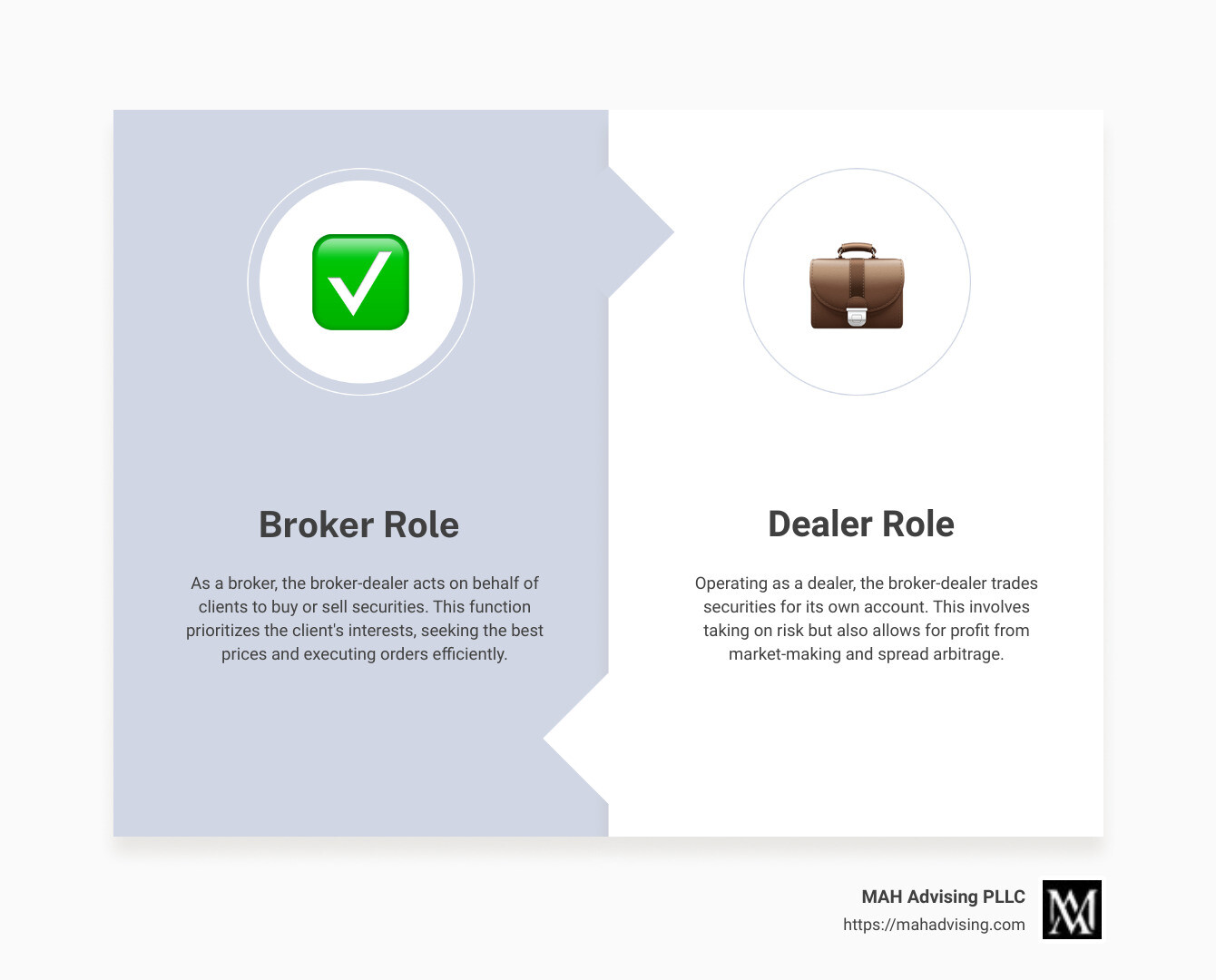
– They do this either for their clients (as a broker) or for their own account (as a dealer).
– They are a central part of the financial services ecosystem, helping to ensure liquidity and facilitate access to securities markets.
Understanding the role and mechanisms of broker-dealers can seem daunting, yet it’s a critical piece of the puzzle for anyone navigating the financial waters, especially in today’s rapidly changing markets. Whether you’re an investor looking for clarity, a business in need of capital markets expertise, or simply curious about how financial trades are executed, grasping the basics of broker-dealers is a fundamental start.
At its core, the broker-dealer’s role blends the traditional face of personalized investment guidance with the brisk, strategic moves of trading and market-making. Knowing when you are dealing with a broker function (helping you buy or sell securities) versus a dealer role (trading for their own account) can significantly influence your understanding and strategy regarding investments.
But why does this matter to you?
In simple terms, whether you’re involved in a legal issue around New York or Florida, seeking aggressive legal counsel, or navigating through the complexities of family, criminal defense, and corporate law, the financial decisions you make – or made on your behalf – can often intertwine with broker-dealers. From ensuring your investments are best positioned, to understanding the nature of the financial advice given, knowing the essence of broker-dealers serves as an empowering tool, often aligning with your needs for tailored solutions and pivotal decisions.
Broker-dealers operate under a maze of regulations designed to protect individuals and the market, which is where the skilled guidance of MAH Advising PLLC becomes invaluable. A firm that not only informs but aligns with your tailored needs and offers round-the-clock legal and financial insight can significantly ease your legal and financial journey.
In conclusion, whether your interest lies in getting ahead in the financial markets, safeguarding your investments, or integrating financial strategy within broader legal solutions, beginning with a clear understanding of broker-dealers is a solid first step.
What is a Broker-Dealer?
When we dive into financial services, the term broker-dealer often pops up. But what is a broker-dealer, exactly? Let’s break it down in simple terms.
Definition
At its core, a broker-dealer is an individual or company that’s in the business of buying and selling securities. Securities are fancy financial terms for investments like stocks, bonds, and mutual funds. Broker-dealers play a crucial role in the financial markets, acting as the middlemen between those who want to buy these investments and those who want to sell.
Natural Person vs. Company
A broker-dealer can be a “natural person” (which is just a legal way to say an individual human being) or a company. When we talk about companies, these can range from small, independent firms to large organizations that are part of global banks or investment companies.
Trading Securities
One of the main jobs of a broker-dealer is to trade securities. This can mean two things:
– For their own account: This is when a broker-dealer buys or sells securities for their own benefit. Think of it as if they’re shopping for themselves.
– For their customers: This is when they buy or sell securities on behalf of their clients. Here, they’re more like personal shoppers, picking out the best investments for their clients.
Own Account vs. Customers
The difference between trading on their own account and for their customers is significant. When acting for customers, a broker-dealer must always look out for the client’s best interests, seeking the best prices and ensuring fair transactions. However, when they trade for their own account, they’re looking to make a profit for themselves.
Understanding the role and responsibilities of a broker-dealer is essential for anyone navigating the financial markets. Whether you’re an investor looking to buy securities or a company aiming to raise capital by selling them, broker-dealers are the facilitators of these transactions. They’re not just traders; they’re pivotal players in the financial ecosystem, providing liquidity (making it easier to buy and sell securities) and helping the market function smoothly.
In the next section, we’ll explore the different types of broker-dealers and how they operate within the financial landscape. Whether you’re considering using a broker-dealer’s services or simply curious about how the financial markets work, knowing the ins and outs of what a broker-dealer does is a valuable piece of knowledge.

Navigating the financial markets can be complex, but understanding the key players, like broker-dealers, can make it a bit easier to comprehend.
Types of Broker-Dealers
When diving into finance, you’ll quickly encounter the term broker-dealer. But did you know there are different types of broker-dealers? Let’s break it down into simpler terms to help you understand better.
Wirehouses
Imagine a giant supermarket, but instead of food, they sell financial products. That’s what a Wirehouse is like. These are large, full-service firms, often with a national presence, offering a wide range of financial services and products. They typically sell their own products to customers, which means they have their own mutual funds, insurance products, and more. The advisors in wirehouses may be more inclined to recommend these in-house products.
Independent Broker-Dealers
Now, think of a local farmers’ market where different vendors sell products from various sources. This is similar to Independent Broker-Dealers. They are not tied to any particular financial product providers, so they can offer products from outside sources. This independence can provide a broader range of investment options, potentially aligning more closely with the client’s interests.
Fidelity Investments
Fidelity Investments is a giant in the broker-dealer world. They offer a wide array of services, including retirement planning, wealth management, and trading services. Fidelity is known for its customer-focused approach and extensive research resources. They operate both as a broker (helping you buy and sell securities) and as a dealer (trading securities for their own account).
Charles Schwab
Charles Schwab is another heavyweight, offering a mix of traditional brokerage services and innovative online trading platforms. Schwab is renowned for its dedication to making investing accessible to everyone, with a wealth of educational resources and tools. Like Fidelity, they also act as both a broker and a dealer, providing a comprehensive suite of services.
Edward Jones
Edward Jones takes a more personal approach, focusing on building long-term relationships with its clients. With offices spread across communities, they offer a face-to-face service model that’s become less common in the digital age. Edward Jones advisors are known for their personalized financial advice, tailored to meet the unique needs of each client.
Each type of broker-dealer has its own set of advantages, and the best choice depends on your individual financial goals and needs. Whether you’re drawn to the comprehensive services of a wirehouse, the flexibility of an independent broker-dealer, or the personalized approach of firms like Fidelity Investments, Charles Schwab, or Edward Jones, there’s an option out there for you.
Understanding the differences between these types of broker-dealers can help you make more informed decisions in your financial journey. The right partner can make all the difference in achieving your financial goals.
Broker vs. Dealer vs. Broker-Dealer
When you’re navigating finance, you’ll often hear about brokers, dealers, and broker-dealers. It might sound like financial jargon, but don’t worry. Let’s break it down into simple terms.
Broker
Think of a broker as your financial buddy who helps you buy or sell securities (like stocks or bonds) on behalf of you, the client. They’re like the friend who knows all about the market and makes sure you get the best deal when you’re looking to trade. Brokers earn their keep through commissions or fees for each transaction they execute for you.
Dealer
On the flip side, a dealer acts on their own behalf. Imagine someone who buys a bunch of concert tickets to sell them at a higher price later. In the financial world, dealers buy and sell securities for their own accounts, hoping to profit from the bid-ask spread (the difference between the buying price and the selling price).
Broker-Dealer
Now, a broker-dealer wears both hats. They can act as your agent (broker) in one instance, and in another, they might buy or sell securities for their own account (dealer). This dual role allows them to be incredibly versatile in the financial markets. They can provide a wide range of services, from executing trades for clients to making markets in specific securities.
Securities Transactions
In the realm of securities transactions, whether buying or selling, the role played by the entity can significantly affect the outcome and experience. An agency broker (just another term for a broker acting as an agent) focuses on getting the best possible deal for their clients. Meanwhile, dealers are looking to make a profit on trades for their own accounts.
Why Does This Matter?
Understanding whether you’re dealing with a broker, a dealer, or a broker-dealer can help you grasp the motivation behind the advice or the transactions they propose. It’s crucial when considering the fees you’re paying and the type of service you’re receiving.
For instance, a broker-dealer might offer you a wide array of products and services, including investment advice and access to proprietary products. Knowing their dual role can help you ask the right questions, like how they’re compensated and whether their recommendations are truly in your best interest.
In short, when you hear what is a broker dealer, think of it as a financial entity capable of acting both as your agent and as a principal in transactions. This dual capability allows them to offer a broad spectrum of services, making them a one-stop-shop for many investors. However, it’s also essential to understand this dual role to navigate potential conflicts of interest and ensure your financial goals are the priority.
Remember, finance is complex, but it doesn’t have to be confusing. By breaking down these terms and roles, you’re better equipped to make informed decisions on your financial journey.
Key Functions and Responsibilities
When we talk about what is a broker dealer, it’s not just about knowing they buy and sell securities. It’s understanding the vital roles they play in the financial markets. Let’s dive into these roles to see how they impact you and the market as a whole.
Investment Advice
First up, investment advice. Broker-dealers often wear the hat of advisors. They can provide you with recommendations on what stocks, bonds, or mutual funds might fit your investment goals. Think of them as the friend who knows a lot about the market’s ups and downs and gives you tips on where to invest your money. However, their advice might come with a bias if they’re also selling their own products.
Market-Making
Next, let’s talk about market-making. This is where broker-dealers really shine. By buying and selling securities from their own accounts, they create a market for these securities. This means when you want to buy or sell a stock, there’s already a price set for it, thanks to the broker-dealer acting as a market maker. It’s like they’re the shopkeeper of the stock market, always having goods (stocks) on the shelves for you to buy.
Trading Activities
Broker-dealers are also heavily involved in trading activities. They execute buy and sell orders for clients and for their own accounts. It’s a dual role that keeps the market lively. Imagine a busy marketplace where everyone is buying and selling goods. The broker-dealer is both the person helping customers find what they need and the vendor shouting out the latest deals.
Capital Raising
When companies need to raise money, broker-dealers step in to help with capital raising. They can underwrite new stock or bond issues, helping companies find investors willing to buy these securities. It’s like if a school wanted to build a new gym and the broker-dealer helped them find people to donate money for it. They play a crucial part in helping companies grow.
Liquidity Provision
Lastly, liquidity provision is a key function. By always being ready to buy or sell, broker-dealers ensure that you can quickly turn your investments into cash or vice versa. They make sure that the market doesn’t get stuck. Imagine wanting to sell your old video games; a broker-dealer ensures there’s always someone ready to buy them from you.
In summary, broker-dealers are the backbone of the financial markets. They provide investment advice, create markets for securities, engage in trading, help companies raise capital, and ensure liquidity. Understanding these roles helps demystify what a broker-dealer does and highlights their importance in your investment journey. As we proceed, keep these functions in mind, especially if you’re considering working with a broker-dealer like MAH Advising PLLC, where tailored financial solutions are crafted to meet your needs.
Regulation and Compliance
When we talk about what is a broker dealer, it’s not just about what they do, but also about the rules they follow. Think of it as a game where broker-dealers are players, and there are specific rules they must follow to ensure everyone plays fair. Let’s break down these rules and see why they’re important.
Securities Exchange Act of 1934
First, there’s the Securities Exchange Act of 1934. This is like the rulebook that started it all. It says that if you’re playing the game (in this case, trading securities), you need to play by the rules. This Act created the Securities and Exchange Commission (SEC) to watch over the game and make sure everyone plays fair.
SEC
The SEC is like the referee. They keep an eye on the game, making sure everyone follows the rules. If someone tries to cheat or play unfairly, the SEC can step in and take action. They’re there to protect investors, maintain fair markets, and ensure capital formation.
FINRA
Then, there’s FINRA, or the Financial Industry Regulatory Authority. Think of FINRA as the coach. They’re not playing the game, but they’re making sure the players (broker-dealers) are trained and know the rules. They also run background checks on the players to make sure they’re fit to play.
SIPC
The Securities Investor Protection Corporation (SIPC) is like a safety net. If a broker-dealer fails, SIPC steps in to protect the customers’ cash and securities. Imagine if a player gets injured during the game, SIPC ensures they’re taken care of.
Best Execution
Best Execution is a rule that says broker-dealers must do their best to execute customers’ trades at the best possible price. It’s like telling the players they need to give their best performance in every match.
Net Capital Rule
Lastly, the Net Capital Rule ensures that broker-dealers always have enough liquid assets to cover their debts and obligations. This rule is like making sure the players are healthy and fit to play the game. If they’re not, they could collapse and hurt themselves or others in the process.
In summary, broker-dealers is tightly regulated to ensure fairness, transparency, and protection for everyone involved. From the Securities Exchange Act of 1934 that sets the stage, to the SEC and FINRA overseeing the play, to the SIPC providing a safety net, and rules like Best Execution and the Net Capital Rule ensuring the game is played right, regulation and compliance are key.
For those considering working with a broker-dealer, understanding these regulations can provide peace of mind. Companies like MAH Advising PLLC navigate these rules to offer tailored financial solutions, ensuring a fair and secure investment journey for their clients.
Now, let’s move on to the next section and explore the differences between a broker-dealer and an investment adviser, and how to choose the right one for your financial needs.
Choosing Between a Broker-Dealer and an Investment Adviser
When diving into the financial world, it’s crucial to understand who you’re dealing with and how they get paid. This can significantly impact your investment experience and outcomes. Let’s break down the key differences between a broker-dealer and an investment adviser, focusing on commission vs. fee, securities sales, investment consultation, and how MAH Advising PLLC fits into this landscape.
Commission vs. Fee
Broker-Dealers typically earn their keep through commissions. This means they make money each time they buy or sell securities on your behalf. Think of them like a real estate agent for your stocks and bonds; they get a piece of the action every time there’s a transaction.
Investment Advisers, on the other hand, usually work on a fee-based model. This could be a flat fee or a percentage of the assets they manage for you. Their focus is on giving advice rather than buying and selling. So, rather than making money every time you trade, they earn based on how much money they’re managing for you.
Securities Sales
If you’re looking to actively buy and sell securities, a broker-dealer might be your go-to. They have the tools and the license to execute trades on your behalf. They’re like the quarterback on the field, making the plays (trades) as you call them.
Investment Consultation
If you’re more interested in getting advice on which securities to buy, sell, or hold, an investment adviser is likely more up your alley. They’re more like a coach, helping you devise a game plan (investment strategy) and guiding you through the execution, but not necessarily making the trades themselves.
MAH Advising PLLC
When choosing between a broker-dealer and an investment adviser, consider what services you value most. Are you looking for someone to execute trades, or are you in search of strategic investment advice? MAH Advising PLLC offers a comprehensive approach, blending the strategic advisory services of an investment adviser with the execution capabilities of a broker-dealer. This hybrid model ensures that you don’t have to choose between hands-on trading support and high-level investment strategy.
The choice boils down to your personal investment goals and preferences. Do you prioritize direct control and transactional flexibility, or is ongoing, strategic guidance more your speed? With MAH Advising PLLC, you get a partner that understands the nuances of both worlds, offering tailored solutions that align with your unique financial objectives.
As we continue to explore the intricacies of the financial services industry, the right partner can make all the difference in navigating the complex landscape of investments.
Michael Hurckes’s Strategic Broker-Dealer Insights and Next Steps
In the journey through broker-dealers, we’ve uncovered the vital role they play in the financial markets, acting as both brokers and dealers to facilitate securities transactions for clients and for their own accounts. Understanding what is a broker dealer and how they operate is crucial for anyone looking to engage with the financial markets, whether you’re an individual investor or a company seeking to raise capital.
At MAH Advising PLLC, we specialize in offering tailored solutions that are designed to meet the specific needs of our clients. We understand that each client’s situation is unique, and there’s no one-size-fits-all solution when it comes to broker-dealer compliance and navigating the regulatory landscape. That’s why we work closely with you to understand your goals and challenges, developing a customized approach that aligns with your objectives.
We pride ourselves on our 24/7 availability. The financial markets don’t sleep, and neither do we. Whether you’re in New York, Florida, or anywhere else, we’re always just a call or email away, ready to provide the support and guidance you need, whenever you need it. Our team is dedicated to ensuring that you have the resources and knowledge to make informed decisions and achieve your financial goals.
With offices in New York and Florida, we’re strategically positioned to serve clients across a broad geographic area. Whether you’re looking for guidance on broker-dealer registration, compliance with securities regulations, or any other aspect of financial services regulation, we’re here to help.
In conclusion, navigating the financial services industry can be challenging, but with the right partner, it doesn’t have to be. At MAH Advising PLLC, we’re committed to providing you with the expert advice and tailored solutions you need to succeed. Whether you’re just starting to explore broker-dealers or you’re looking for a partner to help guide you through the complexities of financial regulation, we’re here for you.
Discover how we can help you navigate the complexities of broker-dealer compliance and achieve your financial objectives. Visit our FINRA compliance service page to learn more about our services and how we can assist you.
Thank you for joining us on this journey through broker-dealers. We look forward to being your trusted partner in the financial services industry.