You have 0 items in your cart


Finding the right broker-dealer is crucial whether you are an investor trying to navigate the market or a business seeking to raise capital. In simple terms, a broker-dealer acts as both a broker, executing orders on behalf of clients, and a dealer, trading for their own account. Understanding the difference between these roles and the types of broker-dealers available is key to finding the best match for your financial goals.
Broker-dealers are the cornerstone of the financial services industry, facilitating trades, offering investment advice, and raising capital. They come in different forms, from full-service firms providing personalized advice to discount brokers offering a more hands-off approach to trading. They are regulated by the Financial Industry Regulatory Authority (FINRA), ensuring they meet specific standards of practice.
For those navigating legal issues in New York or Florida, choosing a broker-dealer with a strong compliance record and a suite of services tailored to your needs can be as vital as selecting the right legal counsel. Whether raising capital for a new venture or managing personal investments, the alignment of your broker-dealer’s services with your objectives cannot be overstated.
What is a Broker-Dealer?
When you’re stepping into investments, you’ll likely hear the term “broker-dealer” tossed around quite a bit. But what exactly does it mean? Let’s break it down into simple terms, focusing on their definitions, roles, and the dual function they serve in the financial market.
Definitions
At its core, a broker-dealer is a person or a company that’s in the business of buying and selling securities. Securities are just a fancy word for financial instruments like stocks, bonds, and mutual funds. Think of broker-dealers as the middlemen in the stock market playground. They can play for their own team (as dealers) or help others play (as brokers).
Roles
-
As a Broker: When acting as a broker, they’re your ally. Imagine you want to buy shares of a company. The broker part of a broker-dealer finds someone selling those shares and helps you make the purchase. They’re essentially your representative in the financial arena, executing buy or sell orders on your behalf.
-
As a Dealer: Now, when they switch hats and act as a dealer, they’re playing for their own team. In this role, they’re selling securities out of their own inventory. If you want to buy shares that they own, they sell these to you directly. It’s like going to a car dealer and buying a car that’s on the lot.
Dual Function
The duality of a broker-dealer is what makes them unique. They can switch roles based on the situation, acting either as an agent (broker) for you or as a principal (dealer) for themselves. This flexibility allows them to fill gaps in the market, ensuring that there’s always a buyer for every seller and vice versa.
-
Why It Matters: This dual capability is crucial for the smooth operation of financial markets. It helps in maintaining liquidity, meaning that it keeps money flowing smoothly so that securities can be bought and sold easily without causing big price changes.
-
Regulation: Given their significant role, broker-dealers are heavily regulated. In the U.S., the Financial Industry Regulatory Authority (FINRA) oversees their operations. This ensures they play by the rules, protecting investors and maintaining trust in the financial markets.
Understanding the role and function of broker-dealers is essential for anyone looking to navigate the investment landscape. They’re not just middlemen; they’re pivotal players ensuring the market’s efficiency and accessibility to both individual and institutional investors.
In the next section, we’ll delve into the different types of broker-dealers and how they cater to diverse investor needs, ensuring you’re well-equipped to choose the right partner for your investment journey.
Types of Broker-Dealers
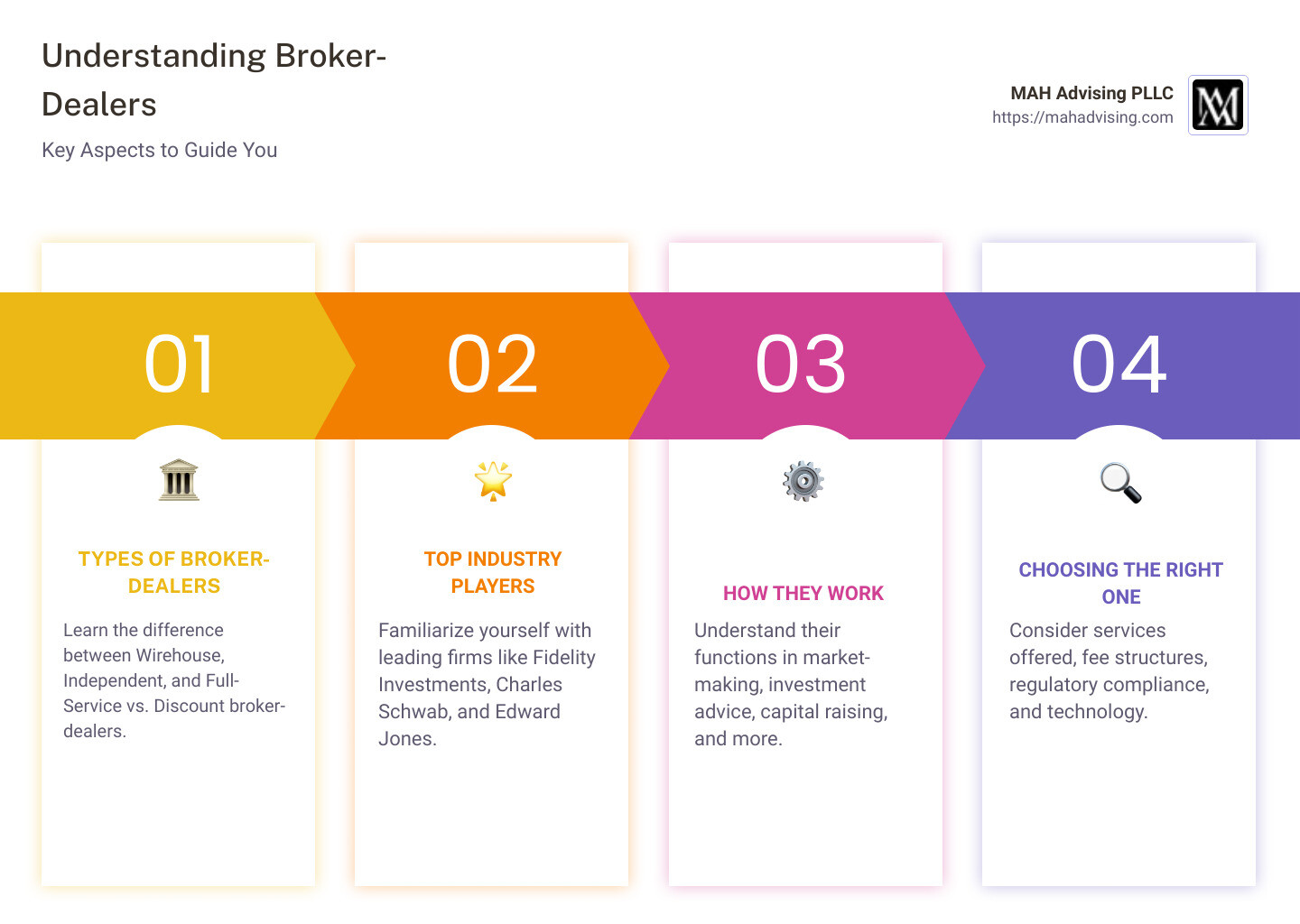
In investing, not all broker-dealers are created equal. They come in different shapes and sizes, each serving investors in their unique way. Let’s break down the main types you’ll come across: Wirehouse, Independent, and the choice between Full-service vs. Discount broker-dealers.
Wirehouse Broker-Dealers
Imagine a giant supermarket, but for financial services. That’s what a wirehouse feels like. These are the big, well-known firms that offer a wide range of products and services, from investment advice to estate planning. They usually have a large network of brokers and are often associated with major financial institutions. Think of names like Morgan Stanley or Merrill Lynch.
Wirehouses can provide a one-stop-shop experience but often come with higher fees due to their extensive service offerings and personalized advice.
Independent Broker-Dealers
Now, picture a local farmer’s market where different stalls offer specialized products. Independent broker-dealers are similar in that they’re not tied to any single financial institution. This independence allows them to offer a broader array of investment products since they’re not limited to selling only the products of a parent company.
Independent broker-dealers are a good fit for investors looking for personalized service and access to a wider range of investment options. They often cater to more experienced investors who value a customized approach.
Full-Service vs. Discount Broker-Dealers
This is where things get interesting. Choosing between a full-service and a discount broker-dealer is like deciding between a guided tour and exploring a city on your own.
Full-Service Broker-Dealers offer the guided tour. They provide a comprehensive range of services, including investment advice, research, retirement planning, and more. If you’re looking for a hands-on approach to your investments and don’t mind paying a premium for expert advice, a full-service broker-dealer might be for you.
On the other hand, Discount Broker-Dealers are for the explorers. They provide the tools and platform for you to make your own investment decisions, without the added cost of advice or research. This option is best suited for do-it-yourself investors who prefer to manage their own portfolios at a lower cost.
Choosing the right type of broker-dealer depends on your investment style, the level of service you desire, and how much you’re willing to pay in fees. Whether you lean towards the comprehensive service of a wirehouse, the personalized options of an independent, or the cost-saving approach of a discount broker-dealer, there’s a fit for every type of investor.
Keep these distinctions in mind to help guide your decision in selecting the broker-dealer that aligns with your investment goals and preferences.
Top Broker Dealers in the Industry
When you’re diving into investing, knowing who the top players are can make all the difference. Let’s talk about some of the big names in the broker-dealer industry. These firms are not just big; they’re influential, offering a range of services that cater to almost every type of investor out there.
Fidelity Investments
Fidelity is like the Swiss Army knife of the investing world. They’ve got tools for everything. Whether you’re just starting out or you’re managing a hefty portfolio, Fidelity offers a mix of services including retirement planning, wealth management, and trading platforms. Their technology is top-notch, making investing accessible to everyone.
Charles Schwab
Imagine a place where you can get banking services, investment advice, and trading platforms all under one roof. That’s Charles Schwab. They’re known for making investing simple for their clients, offering a range of services that cater to both the newbie and the seasoned investor. Their focus on customer service is a big plus.
Edward Jones
Think of Edward Jones as the friendly neighbor of the investing world. They’re big on building personal relationships with their clients. With a focus on long-term investing, they’re all about face-to-face meetings and personalized advice. They’re a great option if you appreciate a more hands-on approach to your investments.
LPL Financial
LPL Financial stands out for its network of independent financial advisors. What does this mean for you? Customized advice. They support their advisors with research, technology, and regulatory compliance, so the advisors can focus on what’s best for you. It’s a win-win.
Cambridge Investment Research
Cambridge is a bit like the mentor you wish you had when you started investing. They’re big on independence, supporting financial professionals who want to offer unbiased advice. They provide the tools and support, but it’s the advisors who build the relationships and tailor the advice to each client.
Securities America
If you’re looking for variety, Securities America might be your match. They support a wide range of financial professionals, from independent advisors to full-service broker-dealers. This means a broad spectrum of services and investment options for clients like you.
Cetera Financial Group
Cetera is like a big tent, welcoming a diverse group of financial professionals under its umbrella. They pride themselves on their community feel, offering support and tools to help advisors provide tailored advice. They’re all about empowering advisors to deliver an exceptional service to their clients.
Choosing the right broker-dealer is like picking a partner for your financial journey. Each of these top broker-dealers brings something unique to the table. Whether it’s the comprehensive services of Fidelity Investments, the personalized approach of Edward Jones, or the independent spirit of LPL Financial, there’s a firm that matches your investment style and goals.
As we explore how broker-dealers work, keep these names in mind. They’re not just companies; they’re potential partners in your investment journey.
How Broker-Dealers Work
When you’re diving into investments, understanding how broker-dealers operate can seem like trying to learn a new language. But don’t worry, I’ll break it down into bite-sized pieces that are easy to digest.
Market-Making
Think of market-making as setting up a lemonade stand in your neighborhood. If you’re the only one selling lemonade, you get to decide the price and make sure there’s always enough lemonade for everyone who wants to buy. In the financial world, broker-dealers act as this lemonade stand for securities, ensuring there’s always a “market” for them. They buy securities when nobody else is buying and sell when nobody else is selling, keeping the market fluid.
Investment Advice
Broker-dealers are like the wise neighbor who’s been running lemonade stands for years. They offer advice based on their experience and knowledge of the market. When acting as brokers, they guide their clients on what securities to buy or sell, ensuring the advice fits the client’s financial goals and risk tolerance.
Capital Raising
Imagine if your lemonade stand got so popular that you wanted to open more stands but didn’t have the cash to do it. You might ask people to invest in your business in exchange for a share of the profits. Broker-dealers help companies in a similar way by raising capital. They connect companies that need money to grow with investors who have money to invest.
Underwriting
Underwriting is like making a promise. If you’re sure your new lemonade stands will be a hit, you might promise your investors they’ll at least get their money back if things don’t go as planned. Broker-dealers make similar promises when they underwrite securities. They agree to buy all the securities from the company and sell them to investors, ensuring the company gets the capital it needs.
Distribution
Finally, distribution is all about getting your lemonade into the hands of thirsty customers. Broker-dealers distribute securities to investors, using their networks and expertise to ensure the securities reach the right people.
In summary, broker-dealers play a crucial role in the financial markets. They keep the market moving, offer valuable advice, help companies grow, make promises through underwriting, and distribute securities to investors. Remember the names mentioned earlier, like Fidelity Investments and Edward Jones? They’re among the many broker-dealers making these complex processes happen every day, acting as the backbone of the investment world.
Keep these functions in mind. They’re the gears that turn behind the scenes, making investing spin.
Next, we’ll dive into how to choose the right broker-dealer for you, considering everything from the services they offer to their fee structures.
Choosing the Right Broker-Dealer
Choosing the right broker-dealer is like picking the right partner for a long journey. It’s crucial to get it right. Here’s how you can make an informed decision:
Services Offered
First, think about what you need. Are you looking for investment advice? Do you need access to a wide range of financial products? Or maybe you want technology that makes trading easy and efficient? Different broker-dealers offer different services. Some provide in-depth research and advice, while others might offer more basic services at a lower cost.
Commission vs. Fee Structure
Money matters. How broker-dealers charge can impact your investment returns. Some use a commission model, charging you each time you buy or sell stocks. Others might charge a flat fee, regardless of how much you trade. And then, there are those who use a percentage of assets under management (AUM) model. Consider what will work best for your trading style and financial goals.
Regulatory Compliance
Safety first. You want a broker-dealer that follows the rules. Regulatory compliance is a must. Check if they are registered with the Financial Industry Regulatory Authority (FINRA) and if they have a clean record. This ensures they are held to strict standards and can provide a level of security for your investments.
Investment Options
Variety is the spice of life – and investing. Look for a broker-dealer that offers a wide range of investment options. This could include stocks, bonds, mutual funds, and more. Having more options can give you the flexibility to diversify your portfolio and potentially reduce risk.
Technology and Tools
In today’s world, technology is key. A good broker-dealer will offer robust trading platforms and tools that make managing your investments easier. This might include mobile apps, analytical tools, and real-time data. These features can help you make informed decisions quickly.
In summary, choosing the right broker-dealer comes down to understanding your needs and how different broker-dealers can meet them. Consider the services they offer, how they charge, their compliance with regulations, the investment options available, and the technology they provide. By taking these factors into account, you can find a broker-dealer that’s the right fit for you and your investment journey.
Remember that the choice of a broker-dealer can significantly impact your investing experience and outcomes.
Frequently Asked Questions about Broker Dealers
When it comes to navigating investments, understanding the role and mechanisms of broker-dealers is crucial. Here are some of the most common questions answered in simple terms.
What’s the Difference Between a Broker and a Dealer?
Broker:
– Acts as an agent for clients, helping them buy or sell securities.
– Earns a commission for each transaction.
– Does not own the securities they’re trading on your behalf.
Dealer:
– Trades securities for their own account.
– Makes money through the bid-ask spread, which is the difference between the buying price and the selling price.
– Owns the securities they trade.
A broker acts on your behalf, while a dealer acts on their own behalf.
How Does a Broker-Dealer Make Money?
Broker-dealers have a few avenues for generating income:
- Commissions: Charged per transaction when acting as a broker.
- Spreads: The difference between the buy and sell price when acting as a dealer.
- Fees: For services like investment advice or account management.
- Interest: On the cash in your brokerage account or from securities lent to traders.
- Underwriting: Fees collected for helping companies issue new securities.
How to Choose a Broker-Dealer?
Choosing the right broker-dealer is akin to selecting a partner for your financial journey. Here are some steps to guide you:
-
Identify Your Needs: Are you looking for hands-on investment advice, or do you prefer a DIY approach? Your needs will dictate the type of broker-dealer that’s right for you.
-
Evaluate the Fee Structure: Understand how they make money. Is it through commissions, spreads, or fees? A clear understanding will help you manage costs effectively.
-
Check Regulatory Compliance: Ensure the broker-dealer is registered with FINRA and complies with current financial regulations. This step is crucial for your protection.
-
Explore Investment Options: Make sure they offer the types of investments you’re interested in. Whether it’s stocks, bonds, mutual funds, or ETFs, diversity is key.
-
Assess Technology and Tools: The right technology can enhance your trading experience. Look for platforms that are user-friendly and offer the tools you need to make informed decisions.
By addressing these points, you can find a broker-dealer that aligns with your financial goals and offers the services, tools, and protection you need to navigate the investment world confidently.
As we’ve explored the intricacies of broker-dealers, from how they operate to how to choose the right one, it’s clear that making an informed decision is paramount. The right broker-dealer can be a valuable ally in achieving your financial objectives.
Michael Hurckes’ Essential Guide to Choosing Your Broker-Dealer
In wrapping up our journey through broker-dealers, we’ve covered a lot of ground. From understanding their dual roles to navigating the different types available and how they operate, it’s evident that choosing the right broker-dealer is crucial for your financial success. But, as we’ve seen, this journey doesn’t have to be one you embark on alone.
At MAH Advising PLLC, we specialize in guiding individuals and businesses through the complex landscape of broker-dealers and ensuring that you’re aligned with one that meets your unique needs and goals. Our expertise in FINRA compliance means we’re not just familiar with the rules of the game—we help you play it better.
Choosing a broker-dealer is about more than just fees or the platform; it’s about finding a partner that aligns with your investment philosophy and offers the support, resources, and regulatory compliance to help you thrive in your financial endeavors. Whether you’re navigating conflicts of interest, looking for technology that enhances your trading experience, or seeking a fiduciary who has your best interests at heart, we’re here to help.

The right broker-dealer acts as your ally in the financial markets, providing the tools, advice, and support you need to achieve your investment goals. With MAH Advising PLLC by your side, you’ll have access to the knowledge and expertise necessary to make informed decisions and pursue a successful investment strategy.
In conclusion, broker-dealers is vast and filled with opportunities for those who navigate it wisely. As you consider your options, you don’t have to go it alone. Let us be your guide, ensuring that your journey in the investment world is both profitable and compliant. Together, we can achieve the financial success you’re aiming for.
For more information on how we can assist you with your broker-dealer and compliance needs, please visit our FINRA compliance service page. Let’s embark on this journey together.