You have 0 items in your cart


When you’re diving into broker-dealer compliance, you’re stepping into a realm that ensures the integrity and efficiency of the financial markets. At its heart, broker-dealer compliance is about adhering to a set of rules and regulations designed to protect investors and ensure fair trading practices.
In the simplest terms, it’s akin to the traffic laws that keep cars moving smoothly and safely on the roads. Without these rules, chaos would ensue, with investors at risk and the market’s trust eroded. Thus, compliance isn’t just about ticking boxes; it’s about building and maintaining the foundation of trust that the financial markets are built upon.
For anyone navigating legal challenges in New York or Florida, understanding the complex landscape of broker-dealer compliance is crucial. Whether you’re grappling with family, criminal defense, or corporate law issues, the overarching principles of integrity, transparency, and accountability in broker-dealer compliance hold valuable lessons and strategies.
Key Points to Understand Broker-Dealer Compliance:
– It’s governed by a mix of laws and organizations including the SEC, FINRA, and state regulators.
– Key regulations include Anti-Money Laundering (AML) measures, the Securities Exchange Act of 1934, and the Regulation Best Interest (Reg BI).
– Compliance programs within broker-dealers are vital for maintaining market integrity and protecting investors.
– Navigating compliance requires a well-structured approach, including a robust compliance team and ongoing risk assessments.
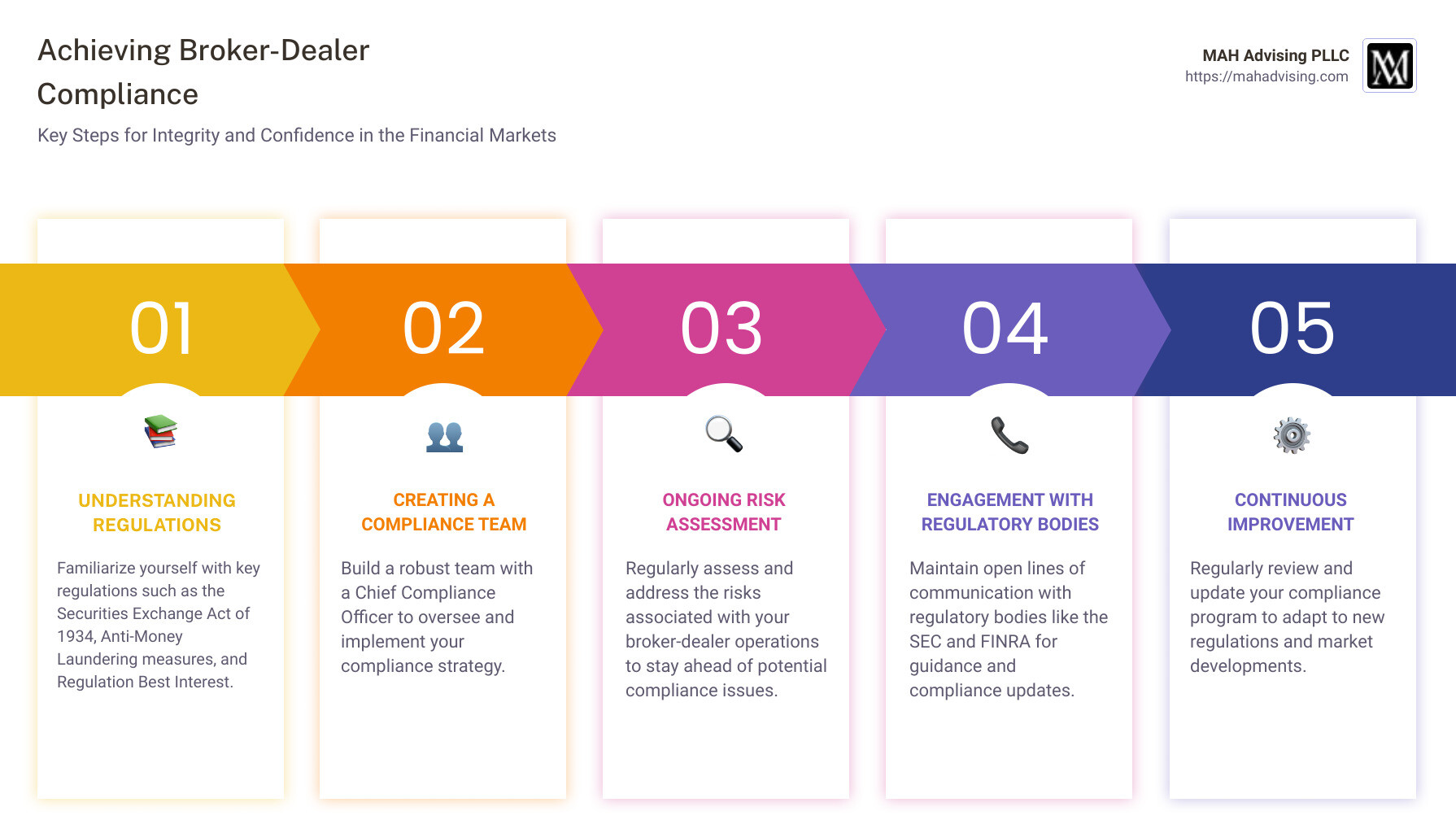
In short, whether you’re deeply involved in the brokerage world or seeking legal partnership for navigating your challenges, understanding the essence and importance of broker-dealer compliance is a crucial step toward achieving your objectives with integrity and confidence.
Understanding Broker-Dealer Compliance
Navigating Broker Dealer Compliance can feel like trying to solve a complex puzzle. But don’t worry, we’ll break it down into simpler pieces. Let’s dive into the key components: FINRA, SEC, AML Regulations, Securities Exchange Act of 1934, and Securities Act of 1933.
FINRA: Your Financial Watchdog
Imagine you’re at a big, bustling market where everyone’s trading goods. FINRA (Financial Industry Regulatory Authority) is like the market’s security guard, making sure everyone plays by the rules. They oversee the actions of broker-dealers to protect investors and maintain fair markets. If someone tries to cheat or cause trouble, FINRA steps in to keep things right.
SEC: The Big Boss
Now, think of SEC (Securities and Exchange Commission) as the mayor of the market town. The SEC has broader powers than FINRA, overseeing not just broker-dealers but all aspects of the securities industry, including stock exchanges, investment advisors, and mutual funds. They’re all about ensuring transparency, fairness, and protecting investors from fraudulent activities.
AML Regulations: Keeping It Clean
Money laundering is like someone trying to sneak dirty money into the market to clean it up. AML Regulations are the rules that make sure this doesn’t happen. Broker-dealers must follow these rules, which include knowing who their customers are (KYC – Know Your Customer) and reporting suspicious activities. These regulations are part of laws like the Bank Secrecy Act and the USA Patriot Act.
Securities Exchange Act of 1934: The Rulebook
Think of the Securities Exchange Act of 1934 as the original rulebook for the market. It set up the SEC and laid down the law for how securities are traded, aiming to eliminate bad practices like fraud. This act makes sure that the trading game is played fairly and that there’s a referee (the SEC) to enforce the rules.
Securities Act of 1933: The Foundation
Before the big rulebook, there was the Securities Act of 1933. This is like the foundation of the market building. It was the first major federal law to regulate the offer and sale of securities. Essentially, it demands that investors receive significant information about securities being offered and prohibits deceit, misrepresentations, and other fraud in the sale.

Bringing It All Together
Understanding these components of broker-dealer compliance is like learning the basic rules of a game. Knowing how FINRA and the SEC operate, what AML regulations require, and what the Securities Acts of 1934 and 1933 entail, sets the groundwork. It’s about ensuring fairness, transparency, and protection for everyone involved in the financial markets.
Remember that compliance isn’t just about following rules to avoid trouble. It’s about building trust with your clients and contributing to a market where everyone can participate fairly and confidently. In the next section, we’ll explore the key regulatory bodies and their roles in more detail, continuing our journey through the landscape of broker-dealer compliance.
Key Regulatory Bodies and Their Roles
In Broker Dealer Compliance, there are several key players, each with its own critical role in ensuring the market operates smoothly and fairly. Understanding who these bodies are and what they do is essential for anyone navigating this space. Let’s break it down:
FINRA (Financial Industry Regulatory Authority)
What They Do: FINRA is like the hall monitor of the broker-dealer world. They make sure that broker-dealers play by the rules, specifically focusing on trading practices, communications with the public, and dispute resolution.
Why They Matter: They’re the ones checking that firms treat customers fairly and that the market stays transparent and honest.
SEC (Securities and Exchange Commission)
What They Do: Think of the SEC as the big boss. Created by the Securities Exchange Act of 1934, they oversee the whole securities industry, including broker-dealers. They’re in charge of making sure companies tell the truth about their businesses, the securities they’re selling are registered, and no funny business goes on in the stock market.
Why They Matter: They’re all about protecting investors and maintaining fair, orderly, and efficient markets.
FinCEN (Financial Crimes Enforcement Network)
What They Do: FinCEN is the detective agency fighting against money laundering. They require broker-dealers to have systems in place to detect and report suspicious activities.
Why They Matter: Their work helps prevent financial crimes, making the financial system safer for everyone.
SIPC (Securities Investor Protection Corporation)
What They Do: SIPC is like an insurance company for your stocks and bonds. If a broker-dealer goes belly up, SIPC steps in to return customers’ cash, stocks, and other securities.
Why They Matter: They give investors peace of mind, knowing their investments are protected up to $500,000 if their broker-dealer fails.
State Securities Regulators
What They Do: Each state has its own regulator keeping an eye on broker-dealers, making sure they comply with state-specific laws and regulations.
Why They Matter: They add an extra layer of protection for investors at the state level, ensuring local laws are followed.
Navigating broker-dealer compliance means dealing with all these regulators, each with its own set of rules and expectations. It’s a complex dance, but understanding the role each regulatory body plays can make it a bit easier to follow the steps. We’ll dive deeper into the major compliance regulations that impact broker-dealers, shedding light on how to navigate these waters successfully.
Major Compliance Regulations Impacting Broker-Dealers
Navigating Broker Dealer Compliance can feel like walking through a maze. But don’t worry, we’re here to make sense of the signs and guide you through it. Let’s break down some of the major compliance regulations that every broker-dealer needs to know about.
Securities Exchange Act of 1934
This is the big one. Think of the Securities Exchange Act of 1934 as the foundation of the modern financial market’s regulatory structure. It created the U.S. Securities and Exchange Commission (SEC), the main watchdog in charge of enforcing federal securities laws. Broker-dealers are required to register with the SEC under this Act, making sure they play by the rules when trading, buying, or selling securities. It’s all about keeping the markets fair and transparent.
Anti-Money Laundering & Bank Secrecy Act
Money laundering is a big no-no. The Bank Secrecy Act (BSA), combined with Anti-Money Laundering (AML) regulations, requires broker-dealers to keep detailed records of transactions and report any suspicious activity. It’s like being asked to keep an eye out for anyone trying to sneak through the back door of the financial system with a bag of money from questionable sources.
USA Patriot Act
Following the events of 9/11, the USA Patriot Act was introduced to tighten the screws on financial transactions that could fund terrorism. For broker-dealers, this means stepping up their game in verifying who their customers are and monitoring their transactions more closely. It’s all about knowing who you’re doing business with.
Regulation Best Interest (Reg BI)
The SEC’s Regulation Best Interest, or Reg BI for short, is like a promise broker-dealers make to their clients to always put their interests first. It’s about ensuring that when a broker-dealer recommends a financial product, it’s the best option for the client, not just the one that pays the highest commission.
FINRA Rules
The Financial Industry Regulatory Authority (FINRA) is like the local sheriff for broker-dealers, making sure everyone in town follows the rules. FINRA sets standards for ethical business behavior, sales practices, and record-keeping, among other things. Staying in line with FINRA rules is essential for maintaining trust and integrity in the financial markets.
Securities Investor Protection Act (SIPA)
Imagine if a broker-dealer went under and took its clients’ assets with it. That’s where the Securities Investor Protection Act (SIPA) comes in. It established the Securities Investor Protection Corporation (SIPC), which acts like a safety net, protecting customers’ securities and cash up to certain limits if their broker-dealer goes bankrupt.
These regulations form the backbone of Broker Dealer Compliance, ensuring that the financial markets operate smoothly, transparently, and fairly. By adhering to these rules, broker-dealers not only protect themselves from legal risks but also contribute to the overall health and efficiency of the economy. Compliance is not just about following laws; it’s about building trust with your clients and the public.
In the next section, we’ll explore how to build an effective compliance program that aligns with these regulations, keeping your broker-dealer business on the right side of the law and fostering a culture of integrity and trust.
Building an Effective Compliance Program
Creating a strong compliance program is more than just ticking boxes. It’s about setting up a system that grows with your business, protects your clients, and keeps you in regulators’ good books. Here’s how to do it, step by step.
Compliance Team
First thing’s first, you need a team. This isn’t a one-person job. Your compliance team should have a mix of skills—from understanding complex regulations to great communication.
Chief Compliance Officer
The captain of your compliance ship is the Chief Compliance Officer (CCO). This person oversees everything compliance-related and makes sure your firm stays on track. Think of them as the guardian of your firm’s integrity.
Compliance Policies and Procedures
Now, let’s talk about the backbone of your compliance program—policies and procedures. These documents should clearly outline how your firm meets its regulatory obligations. Clarity is key. If it’s not easy to understand, it’s not going to be followed.
Risk Assessment
Not all risks are created equal. Conducting a thorough risk assessment helps you understand where your firm is most vulnerable. This way, you can focus your efforts where they’re needed most.
Compliance Training
Training isn’t a one-and-done deal. It’s an ongoing process to keep everyone up-to-date on the latest regulations and internal policies. Make it engaging and relevant to keep your team’s attention.
Monitoring and Testing
Think of this as your compliance health check. Regular monitoring and testing help you catch issues before they become problems. It’s like having a regular check-up to ensure everything is working as it should.
Reporting and Record-Keeping
If it wasn’t documented, it didn’t happen. Accurate record-keeping is crucial for demonstrating compliance to regulators. Plus, it helps you track your progress and identify areas for improvement.
Regulatory Changes
The only constant is change, especially when it comes to regulations. Staying informed about regulatory updates ensures that your compliance program remains effective over time.
Culture of Compliance
Compliance should be part of your firm’s DNA. It’s about creating an environment where doing the right thing is just business as usual. This starts at the top and trickles down to every member of your team.
Engaging with Regulators
Building a positive relationship with regulators can make a big difference. Open and transparent communication shows that you’re committed to compliance.
Safeguard Whistleblowers
Protecting whistleblowers isn’t just the right thing to do; it’s a regulatory requirement. Ensure your policies support and protect those who report wrongdoing.
Leverage Regtech
Technology can be a game-changer for compliance. From monitoring transactions to automating reports, regtech solutions can help you stay ahead of the curve and reduce the risk of compliance slip-ups.
Building an effective compliance program is a journey, not a destination. It requires commitment, attention to detail, and a proactive approach. But with the right team, tools, and mindset, you can create a program that not only meets regulatory requirements but also supports your business’s growth and success.
In the next section, we’ll tackle some common compliance challenges and solutions, helping you navigate the complexities of broker-dealer compliance with confidence.
Common Compliance Challenges and Solutions
Navigating Broker Dealer Compliance can sometimes feel like trying to solve a puzzle that’s always changing its shape. Let’s break down some of these challenges and explore practical solutions to keep your firm on the right track.
AML Compliance
Challenge: Keeping up with Anti-Money Laundering (AML) regulations can be daunting. The rules are complex, and the stakes are high.
Solution: Empower your Chief Compliance Officer (CCO) with the right tools. Implement cutting-edge regtech solutions to enhance the monitoring of Suspicious Activity Reports (SARs) and employee surveillance. Regular training and updates for all staff on AML policies are also crucial.
Customer Protection
Challenge: Ensuring the safety of customer assets and information is a top priority, but it’s also a significant challenge.
Solution: Develop and enforce stringent cybersecurity measures. Regularly review and update your firm’s business continuity and disaster recovery plans. Make sure these plans are well-documented and that all employees are familiar with them.
Insider Trading
Challenge: Preventing insider trading is essential for maintaining market integrity, but detecting it can be difficult.
Solution: Establish a robust surveillance system for monitoring trading activities. Educate your employees about the firm’s policies on insider trading and the legal implications of such activities.
Cybersecurity Measures
Challenge: Cyber threats are constantly evolving, making it hard to protect sensitive data.
Solution: Invest in state-of-the-art cybersecurity infrastructure. Conduct regular cybersecurity risk assessments and implement multi-factor authentication, encryption, and secure access protocols.
Conflict of Interest
Challenge: Identifying and managing conflicts of interest can be complex, especially in larger firms.
Solution: Create clear policies that define what constitutes a conflict of interest. Implement a process for disclosing and addressing conflicts as they arise. Transparency is key.
Order Handling Rules
Challenge: Ensuring that customer orders are handled fairly and efficiently requires constant vigilance.
Solution: Use technology to monitor order flow and execution quality. Train staff on the importance of best execution and establish procedures to regularly review trading practices and execution performance.
Market Access Rule
Challenge: The SEC’s Market Access Rule requires firms to have controls in place to prevent erroneous orders that could disrupt the market.
Solution: Implement pre-trade controls to monitor and manage the risks associated with market access. This might include setting thresholds for trading volumes and values, and ensuring that trades are reviewed in real-time.
The key to overcoming these challenges lies in a proactive approach, leveraging technology, and fostering a culture of compliance within your organization. By tackling these common compliance hurdles head-on, you’ll not only protect your firm but also contribute to the integrity and efficiency of the financial markets.
Keep these solutions in mind and remember that compliance is an ongoing journey, not a one-time task. With the right strategies and tools, you can navigate the complexities of broker-dealer compliance and lead your firm to success.
Frequently Asked Questions about Broker-Dealer Compliance
Navigating Broker Dealer Compliance can be complex. Here, we break down some of the most common questions into simple answers to help you understand the basics.
Who regulates broker-dealers?
Broker-dealers are regulated by several key organizations, each playing a critical role in ensuring the integrity and transparency of the financial markets.
-
The Financial Industry Regulatory Authority (FINRA): This is a non-governmental organization that acts as a self-regulatory body for broker-dealers. It’s responsible for writing and enforcing rules governing the activities of more than 3,700 firms and 630,000 registered representatives.
-
The Securities and Exchange Commission (SEC): As a federal agency, the SEC oversees the securities industry, including broker-dealers, to protect investors and maintain fair, orderly, and efficient markets.
-
State Securities Regulators: Each state has its own securities regulator who oversees the conduct of broker-dealers within their jurisdiction, adding another layer of oversight.
What is FINRA compliance?
FINRA compliance refers to the adherence to the rules and regulations set forth by FINRA. These rules cover a wide range of activities, including:
- Ensuring that all communications with the public are not misleading and provide all necessary information.
- Conducting business with high standards of commercial honor.
- Upholding rigorous standards for the protection of customer information and funds.
FINRA compliance is about maintaining the trust and confidence of investors by ensuring that broker-dealers operate fairly and transparently.
What are the responsibilities of a broker-dealer?
Broker-dealers wear many hats, but their primary responsibilities can be boiled down to a few key areas:
-
Trade Execution: Broker-dealers execute trades on behalf of their clients, ensuring prompt and best possible execution of securities transactions.
-
Custody of Assets: They are responsible for the safekeeping of clients’ securities and cash.
-
Compliance and Reporting: Broker-dealers must adhere to a complex web of regulatory requirements, including maintaining accurate records and reporting suspicious activities.
-
Client Recommendations: When advising clients, broker-dealers must ensure that their recommendations are suitable based on the client’s financial situation, needs, and investment objectives.
-
Market Making: Some broker-dealers act as market makers, providing liquidity to the market by buying and selling securities from their own inventory.
Understanding the roles and regulations surrounding broker-dealers is crucial for anyone involved in the financial markets. By ensuring compliance with these rules, broker-dealers contribute to the integrity and efficiency of the financial markets, fostering a secure environment for investors.
As we conclude this section, it’s clear that broker-dealer compliance is not just about following rules—it’s about building a foundation of trust and reliability in the financial system.
Michael Hurckes: Sustaining Broker-Dealer Compliance Excellence
Maintaining Compliance
In the complex world of financial services, maintaining compliance is not just a legal requirement; it’s a cornerstone of trust and integrity. Broker Dealer Compliance ensures that firms operate within the law, but more importantly, it protects investors and maintains the stability of the financial markets. It’s not a one-time task but an ongoing commitment that requires diligence, understanding, and adaptability.
The landscape of regulations is changing, with new rules and amendments emerging as the market changes. Staying compliant means staying on top of these changes and understanding how they affect your operations. It involves regular reviews of your compliance program, continuous training for your team, and an open line of communication with regulatory bodies.
Continuous Improvement
The goal of any compliance program should be continuous improvement. This isn’t just about preventing violations; it’s about fostering a culture that values ethical behavior, transparency, and accountability. Continuous improvement means regularly assessing your compliance processes, seeking feedback, and making necessary adjustments. It’s about learning from past mistakes and proactively looking for ways to enhance your compliance efforts.
This approach not only helps in maintaining compliance but also contributes to the overall growth and success of your firm. A strong compliance program can be a competitive advantage, demonstrating to clients and investors that you are committed to doing business the right way.
MAH Advising PLLC
At MAH Advising PLLC, we understand the challenges and complexities of Broker Dealer Compliance. Our team of experts is dedicated to guiding you through the regulatory landscape, ensuring that your compliance program not only meets current requirements but is also positioned for future changes. We believe in a proactive approach, focusing on education, strategy, and continuous improvement.
Our services are designed to address the unique needs of your firm, from developing comprehensive compliance policies to providing ongoing support and advice. We’re not just consultants; we’re partners in your success, committed to helping you build a culture of compliance that fosters trust, integrity, and growth.
In conclusion, navigating Broker Dealer Compliance is a journey that requires knowledge, vigilance, and a commitment to continuous improvement. With the right partner and approach, you can turn compliance from a challenge into an opportunity, enhancing the reputation and success of your firm. Let MAH Advising PLLC be your guide, ensuring that your journey in the investment world is both compliant and successful.
For more information on how we can assist you with your broker-dealer and compliance needs, please visit our FINRA compliance service page. Together, we can achieve the financial success you’re aiming for.