You have 0 items in your cart


Introduction
If you’re diving into finance, you’ve likely come across the FINRA Series 7 Exam. It’s a crucial step for anyone aspiring to be a securities trader or broker in the United States. Managed by the Financial Industry Regulatory Authority (FINRA), this exam licenses you to trade many types of securities, but not commodities or futures. The Series 7 is known for its depth and breadth, covering topics like investment risk, taxation, and both equity and debt instruments.
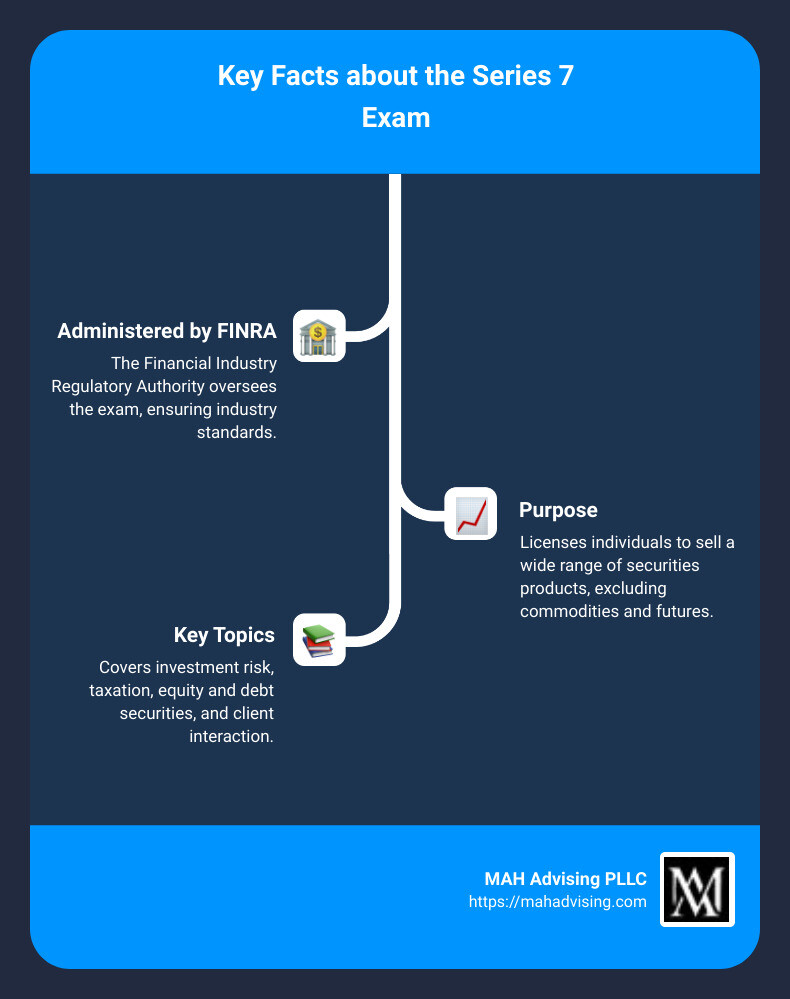
- Quick Facts about the Series 7 Exam:
- Administered by: FINRA (Financial Industry Regulatory Authority)
- Purpose: Licenses you to sell a wide range of securities products
- Excludes: Commodities and futures
- Key Topics: Investment risk, taxation, securities (equity and debt), client interaction
In the bustling streets of New York or the sunny shores of Florida, whether you’re navigating complex family dynamics, defending against criminal charges, or making corporate decisions, understanding the financial landscape can be crucial. The Series 7 license not only elevates your qualifications but also aligns with the dedication to professionalism and excellence that legal professionals strive for in these states.
Understanding the Series 7 Exam
When you’re getting ready to take on the FINRA Series 7 Exam, it’s like preparing for a major milestone in your financial career. Let’s break down what this exam entails in a way that’s easy to digest.
Exam Format
The Series 7 Exam is not a sprint; it’s more of a marathon. It’s structured as a multiple-choice test that examines your understanding across a broad spectrum of securities knowledge. You’ll be navigating through questions that test your ability to handle everything from client advisory roles to transaction completions.
Duration
You’ll have a total of 225 minutes (or 3 hours and 45 minutes) to complete the exam. It’s a sizable chunk of time, but considering the range of topics covered, every minute counts.
Number of Questions
The exam consists of 125 multiple-choice questions. Each question is designed to challenge your understanding of securities, making it crucial to have a well-rounded grasp of the subject matter.
Passing Score
To pass the Series 7 Exam, you need a score of 72% or higher. It might seem daunting, but with the right preparation, it’s an achievable goal.
The Series 7 Exam is a comprehensive test that requires a deep dive into securities. It’s not just about memorizing facts; it’s about understanding how to apply knowledge in real-world scenarios. As shared on Reddit, many who’ve taken the exam emphasize the importance of practice tests and understanding key concepts over rote memorization.
The Series 7 Exam is your gateway to becoming a General Securities Representative. It demands dedication, but it’s a crucial step if you’re looking to play a significant role in the securities industry. The journey to passing this exam starts with understanding its structure and requirements, setting the stage for effective preparation.
Transitioning smoothly from understanding the exam’s structure, the next crucial step involves knowing the eligibility criteria and how to register for the Series 7 Exam. Let’s delve into that in the following section.
Eligibility and Registration Process
Eligibility Criteria
Before you can sit for the FINRA Series 7 exam, there are a few boxes you need to tick. First and foremost, you must be associated with or sponsored by a FINRA member firm. This means you need to be employed or have an offer of employment from a firm that’s registered with FINRA.
Additionally, there’s a corequisite exam you need to be aware of—the Securities Industry Essentials (SIE) exam. The SIE exam lays the groundwork for the Series 7, covering basic concepts in the securities industry. You don’t necessarily have to pass the SIE exam before the Series 7, but you do need to pass both to earn your General Securities Representative registration.
Sponsorship by a FINRA Member Firm
Sponsorship by a FINRA member firm is not just a formality. It’s a commitment from the firm that they see potential in you and are willing to back your entry into the securities industry. This sponsorship is crucial, as it’s your ticket to register for the Series 7 exam. Without it, you simply can’t proceed.
SIE Exam Corequisite
The SIE exam is a relatively new addition to the FINRA qualification process, introduced to streamline the examination framework. It tests your basic understanding of securities industry concepts and is a necessary step towards taking the Series 7 exam. Think of it as the foundation on which your Series 7 knowledge will be built.
Registration Steps
Once you’ve secured sponsorship from a FINRA member firm and have a solid understanding of the SIE exam requirement, it’s time to register for the Series 7 exam. Here’s a simplified breakdown of the steps you’ll need to follow:
- Get Sponsored: Your journey begins with obtaining sponsorship from a FINRA member firm. This is non-negotiable.
- Enroll for the Exam: With your sponsor’s support, you’ll enroll for the Series 7 exam through the Financial Industry Regulatory Authority’s (FINRA) Central Registration Depository (CRD) system.
- Prepare for the SIE Exam (if you haven’t already): While preparing for the Series 7, don’t overlook the SIE exam. It’s a corequisite, and passing it is mandatory.
- Schedule Your Exam: Once registered, you’ll receive information on how to schedule your exam with Prometric, the testing service provider. You can choose a date and location that’s convenient for you.
- Study and Prepare: Leverage the study materials and resources available to you, including those from your sponsor firm and other reputable providers.
- Take the Exam: On the scheduled date, head to the Prometric testing center with the required identification and give it your best shot.
The key to navigating the eligibility and registration process smoothly is to stay organized and follow the steps laid out by your sponsoring firm and FINRA. With the right preparation and support, you’ll be on your way to achieving your General Securities Representative qualification.
Transitioning from registration and eligibility straight into what you can expect on the day of the exam itself, the next section will cover everything from scheduling details with Prometric to the protocols you’ll need to follow at the test center.
Exam Content and Preparation
Major Job Functions Covered
The FINRA Series 7 exam is comprehensive, designed to ensure that you are well-prepared for your role as a General Securities Representative. It covers four major job functions critical to this role:
-
Seeks business for the broker-dealer from customers and potential customers: This involves understanding how to attract and retain clients, including knowledge of various securities products and how they meet clients’ needs.
-
Opens accounts after obtaining and evaluating customers’ financial profile and investment objectives: You need to know how to open client accounts, which includes gathering essential information to ensure investment advice is suitable for their financial situation.
-
Provides customers with information about investments, makes suitable recommendations, transfers assets, and maintains appropriate records: This function requires a deep understanding of investment products, as well as the ability to maintain accurate client records.
-
Obtains and verifies customers’ purchase and sales instructions; processes, completes, and confirms transactions: This involves executing client instructions accurately and efficiently, ensuring all transactions comply with regulatory requirements.
Study Materials and Resources
To prepare for the Series 7 exam, several resources are available:
-
Kaplan: Known for its comprehensive study materials, Kaplan offers a variety of options to suit different learning styles, including self-study packages and online classes. Their materials are designed to cover all aspects of the exam thoroughly.
-
Best Practices Guide: Kaplan has also prepared a Best Practices Guide that includes recommended study hours, how to use your study materials effectively, and test-taking tips. This guide is an invaluable resource for anyone preparing for the Series 7 exam.
-
Study Calendar: Planning your exam preparation is made simpler with customizable Study Calendars that schedule daily tasks based on your study timeframe and exam date. Both Kaplan and other providers offer these tools to help you manage your study time effectively.
Preparation Tips
-
Study Hours: The amount of time you’ll need to dedicate to studying for the Series 7 exam can vary widely, depending on your familiarity with the material. On average, candidates should plan for 80-100 hours of study time.
-
Test-Taking Strategies: Practice exams are crucial for understanding the format of the Series 7 and for identifying areas where you may need further review. Taking multiple practice exams can also help you build confidence and improve your test-taking speed and accuracy.
-
Homework Questions: To reinforce what you’ve learned, plan to complete homework questions each night. Reviewing the answers and explanations for why they are right or wrong will enhance your understanding and retention of the material.
As you prepare for the Series 7 exam, understanding the concepts deeply rather than memorizing answers will be key to your success. Utilize the resources available, stick to your study plan, and approach the exam with confidence. With thorough preparation, you’ll be well on your way to passing the Series 7 and moving forward in your finance career.
Now, let’s look at what to expect on the day of the exam, including how to schedule your test with Prometric and the identification requirements and protocols at the test center.
Exam Day: What to Expect
The day of the FINRA Series 7 exam can be nerve-wracking, but knowing what to expect can ease some of that anxiety. Here’s a breakdown of the essential things you need to know about scheduling, identification requirements, and test center protocols.
Scheduling with Prometric
To take the FINRA Series 7 exam, you’ll need to schedule your test through Prometric, a global provider of testing and assessment services. It’s recommended to schedule your appointment three to four weeks before your desired exam date to ensure you get a time and date that works best for you. Testing slots can fill up quickly, especially during peak testing periods, so don’t wait until the last minute.
Identification Requirements
On the day of your exam, you must bring two forms of identification to the test center. One of these IDs must be a valid, government-issued photo ID, such as a passport or driver’s license. The second form of ID must have your signature, like a credit card or social security card. Be sure the names on your IDs match exactly with the name you used to register for the exam. Discrepancies can cause delays or even prevent you from taking the test.
Test Center Protocols
When you arrive at the test center, expect to go through a standard security check. Personal items, including phones, watches, and bags, are not allowed in the testing room. Most centers provide lockers where you can store your belongings during the exam. To avoid stress, aim to arrive at least 30 minutes early. This extra time allows you to complete the check-in process and settle in before the exam starts.
Prometric test centers are designed to provide a consistent, standardized testing experience. Still, it’s a good idea to familiarize yourself with the Prometric website to know exactly what to expect. You can find information on your testing center’s location, what to bring, and other exam day tips.
The key to a smooth exam day is preparation. Ensure you have the proper identification, know the location of your testing center, and arrive early. With these steps, you’ll be set to tackle the Series 7 exam with confidence.
After your thorough preparation, the next step in your finance career awaits! Let’s move on to what comes after you’ve conquered the Series 7 exam: obtaining your General Securities Representative registration and exploring the activities you’re now qualified to perform.
After the Exam: Next Steps
Congratulations! If you’ve reached this point, it means you’ve taken on the challenging finra Series 7 exam. But what happens after the dust settles and you’ve successfully passed? Here’s a roadmap for your next steps.
Passing the Exam
First and foremost, take a moment to breathe and appreciate your achievement. Passing the Series 7 exam is no small feat. It demonstrates a solid understanding of the securities industry and qualifies you to engage in a broad range of securities activities.
Once you pass, you won’t receive a physical certificate from FINRA. Instead, your passing status is updated in the Central Registration Depository (CRD), which your employer or potential employers can access. This digital confirmation serves as your proof of passing.
Obtaining General Securities Representative Registration
Passing the Series 7 exam is a significant milestone, but it’s not the end of the road. To actually operate as a General Securities Representative, you must be officially registered with FINRA. This process typically involves your sponsoring firm submitting a Form U4 (Uniform Application for Securities Industry Registration or Transfer) on your behalf. This form registers you with both FINRA and the relevant state securities regulators.
It’s essential to ensure all information on your Form U4 is accurate and up-to-date, as inaccuracies can delay your registration process. Be prepared to disclose any relevant financial or criminal history, which regulators will review as part of your registration.
Permitted Activities
Once registered, you can engage in a wide array of securities transactions. As a General Securities Representative, you’re qualified to solicit, purchase, and/or sell:
- Corporate securities
- Municipal securities
- Investment company securities
- Variable annuities
- Direct participation programs
- Options
- Government securities
This broad range of permitted activities opens up numerous career paths in the financial industry, from working with individual clients on their investment portfolios to advising corporations on raising capital through securities offerings.
Continuous Education and Compliance
The financial industry is changing, with new regulations and products continuously emerging. As such, continuous education and compliance with regulatory standards are crucial for your success and integrity in the field.
FINRA requires that all registered representatives complete a Regulatory Element Continuing Education (CE) program every three years to keep their knowledge current. Additionally, staying informed about industry standards and regulatory changes is vital. Regularly review FINRA notices and participate in additional training and education opportunities.
By staying informed and compliant, you not only safeguard your career but also provide the best possible service to your clients, ensuring their trust and your professional reputation.

Exploring Further Qualifications
Now that you have the Series 7 under your belt, consider further qualifications that can expand your expertise and career opportunities. Depending on your career goals, you might explore:
- The Series 63 (Uniform Securities Agent State Law Examination) for state law compliance.
- The Series 65 or Series 66 if you’re interested in offering investment advice.
Each of these exams opens additional doors and allows you to specialize further in the financial services industry.
In summary, passing the finra Series 7 exam marks the beginning of your journey as a General Securities Representative. From registration to engaging in permitted activities, continuous education, and exploring further qualifications, a world of opportunity awaits in the finance industry. Stay informed, stay compliant, and seize the opportunities before you to build a rewarding career.
Now, let’s delve into some Frequently Asked Questions about the Series 7 Exam to clear up any remaining queries you might have.
Frequently Asked Questions about the Series 7 Exam
Navigating the path to becoming a registered securities professional can be complex. The Series 7 exam, in particular, often prompts a lot of questions from prospective candidates. Let’s tackle some of the most common inquiries.
What does the Series 7 exam qualify you to do?
In simple terms, passing the Series 7 exam grants you the license to sell a broad range of securities products. This includes stocks, bonds, mutual funds, and options, among others. It’s a crucial step for anyone aiming to work as a general securities representative. The license, however, does not cover the sale of real estate or life insurance products. For more detailed insight, this general overview of the Series 7 exam could be helpful.
How difficult is the Series 7 exam really?
The difficulty of the Series 7 exam can vary significantly from one individual to another, largely depending on one’s background in finance and study habits. Some find the breadth of topics challenging, as the exam covers everything from securities regulations to customer care practices. According to discussions on platforms like Reddit, candidates who dedicate sufficient time to studying and utilize practice exams tend to find the exam manageable. It’s not just about hard work; it’s about smart preparation.
If I pass the Series 7 exam, can I trade municipal securities?
Yes, but with limitations. If you pass the Series 7 exam, you are qualified to engage in municipal securities sales to and purchases from customers. However, if you wish to be involved in structuring municipal securities underwritings or perform more complex activities related to municipal securities, you will need to pass additional exams, such as the Series 52 for municipal securities representatives or the Series 53 for municipal securities principals. For those who obtained their Series 7 registration after November 7, 2011, the Series 52 exam becomes a prerequisite for taking the Series 53 exam. More detailed information on these requirements can be found in discussions about municipal securities qualifications.
Understanding these aspects of the Series 7 exam can help demystify the process and set clear expectations for candidates. Achieving success in the Series 7 exam opens up a world of opportunities in the securities industry, but it requires diligent preparation and a solid grasp of the financial markets.
Conclusion
Congratulations on reaching the end of our guide on the FINRA Series 7 exam. By now, you should have a comprehensive understanding of what it takes to prepare for and succeed in this crucial step towards a career in the securities industry. But passing the exam is just the beginning. Let’s explore the exciting career opportunities, the importance of continuous learning, and the significance of regulatory compliance in your journey ahead.
Career Opportunities
Achieving your Series 7 certification means you’re now qualified to engage in a wide array of activities in the securities industry. This includes selling stocks, bonds, mutual funds, and other investment products. Your career could take several paths from here, whether you choose to become a financial advisor, a stockbroker, or play a crucial role in a brokerage firm. The Series 7 license is your ticket to a fulfilling career in finance, opening doors to roles that were previously out of reach.
Importance of Continuous Learning
The financial markets are constantly evolving, and so are the regulations that govern them. To stay ahead in your career, embracing the ethos of continuous learning is non-negotiable. This could mean pursuing further certifications, such as the Series 63 or Series 65, to expand your qualifications and services you can offer to clients. Keeping abreast of market trends, regulatory changes, and new financial products will ensure you remain a valuable asset to your clients and your firm.
Regulatory Compliance
Navigating the complex landscape of financial regulations is a critical aspect of working in the securities industry. Adhering to these regulations not only helps maintain the integrity of the financial markets but also protects investors from fraud and malpractices. Your Series 7 license is a testament to your understanding of these regulatory requirements, but compliance is an ongoing process. Ensuring you’re up-to-date with the latest regulations is crucial to your career’s longevity and success.
At MAH Advising PLLC, we’re committed to supporting financial professionals through every step of their careers. From preparing for regulatory exams to navigating the complexities of compliance, our expertise is designed to help you succeed. Your journey in the securities industry is a marathon, not a sprint. With the right preparation, continuous learning, and a commitment to compliance, you’re well on your way to a rewarding career.

In conclusion, passing the FINRA Series 7 exam opens up a world of possibilities in the securities industry. It’s a significant achievement that sets the stage for a rewarding career. However, the journey doesn’t stop here. Embracing continuous learning and staying vigilant about regulatory compliance will ensure you not only succeed but thrive in the dynamic world of finance.