You have 0 items in your cart


- Quick Snapshot:
- Purpose: Assess basic knowledge of the securities industry.
- Format: 75 multiple choice questions.
- Duration: 1 hour and 45 minutes.
- Passing Score: 70.
- Cost: $80.
- Open To: Anyone aged 18 or older.
Are you feeling overwhelmed by the thought of taking the Securities Industry Essentials (SIE) Exam? You’re not alone. This crucial first step towards a flourishing career in the securities industry might seem daunting. At MAH Advising PLLC, we understand the importance of not just passing the SIE Exam but acing it. That’s why we’ve put together this ultimate guide. Our goal? To transform your nervous energy into confidence with straightforward, actionable advice. Whether you’re a student, a professional seeking to make a career switch, or just looking to enrich your knowledge, we’re here to navigate this journey with you.
The SIE Exam serves as a foundational test that gauges your understanding of the securities industry, covering concepts like types of products and their risks, market structures, regulatory agencies, and prohibited practices. Success in this exam opens doors to further qualifications and opportunities in the field. Yet, the plethora of study materials and advice out there can confuse even the most diligent candidates. Because of this, our guide is crafted to simplify complex topics, offering you a clear and concise path to studying, registering for, and ultimately acing the SIE Exam.
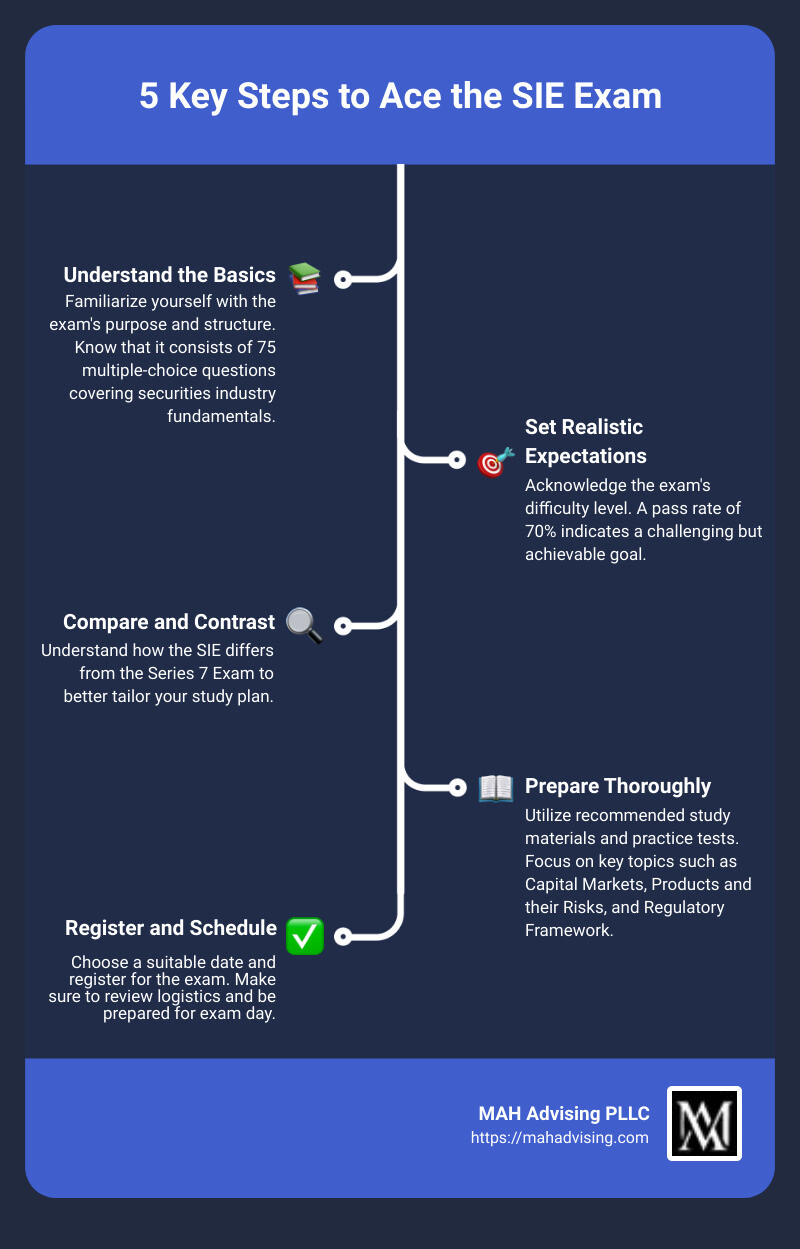
Understanding the Purpose of the SIE Exam
When it comes to launching a career in the securities industry, understanding the foundational elements is crucial. This is where the Securities Industry Essentials® (SIE®) Exam comes into play. Administered by the Financial Industry Regulatory Authority (FINRA), the SIE exam serves as the entry point for anyone aspiring to dive into the financial services sector.
What is the SIE Exam?
At its core, the SIE exam is designed to assess a candidate’s basic knowledge of the securities industry. This includes a wide array of critical concepts such as the types of products available in the market, their associated risks, the structure and functioning of securities markets, and an overview of regulatory agencies and their roles. Additionally, it covers the ethical considerations and prohibited practices within the industry.
Why is it Important?
The significance of the SIE exam cannot be overstated. It acts as a foundational step for those looking to pursue a career in securities, offering a standardized benchmark for entry-level knowledge. By passing this exam, candidates demonstrate to potential employers their commitment and understanding of the essential concepts of the financial services industry.
-
Gateway to Further Opportunities: Passing the SIE exam is the first step in qualifying for more advanced securities licensing exams, such as the Series 7, Series 6, and other qualification exams necessary for specific roles within the industry.
-
Accessibility: One of the key features of the SIE exam is its accessibility. It’s open to individuals aged 18 and older, and you don’t need to be employed by a FINRA-member firm to take it. This opens the door for college students, career changers, and anyone interested in the securities industry to get a head start on their career path.
-
Validity and Convenience: The exam results are valid for four years, allowing ample time for individuals to find sponsorship by a member firm for further qualification exams. Additionally, with options for online and in-person testing, the SIE exam is designed to accommodate a wide range of candidates.
Conclusion
The SIE exam lays the groundwork for a successful career in the securities industry. It not only tests fundamental knowledge but also signals to employers a candidate’s readiness and commitment to professional growth. For those of us at MAH Advising PLLC, guiding you through the complexities of regulatory exams like the SIE is a key part of our mission. We believe that with the right preparation and understanding, anyone can embark on a rewarding career in the financial services industry.
Understanding the purpose of the SIE exam is the first step. With this knowledge in hand, you’re better positioned to navigate your journey through the securities industry with confidence.
Is the SIE Exam Difficult? Setting Realistic Expectations
Entering finance and securities can be as exciting as it is daunting. A critical stepping stone in this journey is the Securities Industry Essentials (SIE) exam. Given its significance, a common question we encounter at MAH Advising PLLC is: “Is the SIE exam difficult?” Let’s break it down.
Understanding the SIE Exam Difficulty Level
The SIE exam is designed to assess a candidate’s foundational knowledge of the securities industry. This includes understanding products, market structures, and regulatory framework. While the SIE exam serves as an introductory-level test, it should not be underestimated.
The difficulty of the SIE exam can vary greatly depending on your background and familiarity with the financial industry. For those new to the field, it may present more of a challenge, necessitating thorough preparation. On the other hand, individuals with some experience or education in finance might find it more manageable.
Realistic Expectations and the SIE Exam Pass Rate
It’s important to set realistic expectations. Many candidates pass the SIE exam on their first attempt. However, not everyone does, and some may require a second try. This isn’t a reflection of one’s potential in the financial industry but rather a call to adjust study strategies and preparation efforts.
Although specific pass rates for the SIE exam are not publicly disclosed by FINRA, the consensus is that with adequate preparation, passing is certainly achievable. Success on the SIE exam is less about innate talent and more about how well you prepare.
Preparing for Success
At MAH Advising PLLC, we emphasize the importance of a solid preparation strategy. Here are a few tips we’ve found to be effective:
- Understand the Exam Content: Familiarize yourself with the content outline provided by FINRA. Knowing what to expect can help you focus your study efforts more effectively.
- Practice, Practice, Practice: Take advantage of practice tests and question banks. These can give you a feel for the exam format and identify areas where you need further review.
- Create a Study Plan: Allocate sufficient time to study each section of the exam. Break down your study sessions into manageable chunks and stick to a schedule.
- Seek Support: Don’t hesitate to seek out additional resources if you’re struggling with certain topics. This could be in the form of study groups, online forums, or professional tutoring.
The SIE exam is just the start of your journey in the securities industry. Passing it is a significant achievement and sets the stage for further qualifications and career opportunities.
As you prepare for the SIE exam, keep in mind that it’s not just about memorizing facts and figures. It’s about understanding the broader financial landscape and how you fit into it. With the right preparation and mindset, you’ll be well on your way to acing the SIE exam and advancing your career in finance.
For more insights and support in preparing for the SIE exam, visit our dedicated section on SIE Exam Preparation at MAH Advising PLLC. Let us be part of your success story.
How the SIE Exam Compares to the Series 7
When embarking on a career in the financial services industry, understanding how the SIE exam compares to the Series 7 exam is crucial. Both are essential steps for those looking to excel in the securities industry, but they serve different purposes and come with their own unique challenges.
The Purpose and Scope
The SIE exam, or Securities Industry Essentials exam, is designed as an introductory-level test that covers basic knowledge of the securities industry. It’s the first step for anyone looking to enter the finance field, providing a broad overview of concepts and regulations.
On the other hand, the Series 7 – General Securities Representative (GS) exam is more specialized. It’s intended for individuals who will be engaging in the buying and selling of securities, such as stocks and bonds. The Series 7 exam delves deeper into topics related to trading, investment risk, and interaction with clients.
Difficulty Level: SIE vs. Series 7
The SIE exam is often considered the less difficult of the two, mainly because it deals with foundational knowledge of the securities industry. It’s designed to test your understanding of basic concepts and regulations. Many candidates pass the SIE on their first attempt, but it’s not uncommon to need a second try.
The Series 7 exam, in contrast, is known for its complexity. It covers a wider range of topics in greater depth, particularly in areas like options and suitability-based product questions. The Series 7 is a more challenging hurdle, requiring a more extensive preparation to ensure success.
Exam Structure and Content
Both exams are administered by FINRA, but their structures are quite different:
-
The SIE exam consists of 75 questions, which include topics on capital markets, products and their risks, trading and customer accounts, and the regulatory framework. Candidates have an hour and forty-five minutes to complete it.
-
The Series 7 exam is longer, with more detailed questions that test candidates’ knowledge on investment risk, taxation, equity and debt instruments, and package securities, among others.
Career Implications
Passing the SIE exam is a significant first step in the finance industry, making you a more attractive candidate for internships and entry-level positions. It’s a way to demonstrate your commitment and basic understanding of the industry to potential employers.
The Series 7 exam, however, is what truly opens doors to a career as a securities representative. Passing this exam qualifies you to engage in a broader scope of securities transactions and to provide more in-depth financial advice to clients.
Conclusion: A Stepping Stone vs. A Gateway
Think of the SIE as a stepping stone: it’s your entry into securities, ensuring you have the essential knowledge to proceed. The Series 7, however, is the gateway to a full-fledged career in securities trading and advising.
For those aiming to make significant strides in the financial services industry, succeeding in both exams is crucial. Starting with the solid foundation that the SIE provides, candidates can confidently move on to tackle the complexities of the Series 7.
For personalized advice and comprehensive preparation resources for both the SIE and Series 7 exams, explore our services at MAH Advising PLLC. With our expertise, you can navigate your exam preparations more smoothly and effectively, setting a strong foundation for your career in the financial services industry.
The Value of the SIE Exam in Your Financial Career
Passing the SIE exam is more than just a milestone; it’s a significant step forward in your career in the financial industry. This exam is not just about proving your knowledge; it’s about opening doors to opportunities and demonstrating your commitment to professional growth. Let’s break down why the SIE exam is worth your time and effort.
A Mark of Dedication and Knowledge
The SIE exam showcases your foundational understanding of the securities industry, including key concepts, products, and regulatory frameworks. This knowledge is essential not just for passing the exam but for navigating the complexities of the financial markets. By passing the SIE, you signal to potential employers your dedication to pursuing a career in this field.
Jumpstarting Your Career
One of the most compelling reasons to take the SIE exam is the advantage it provides in the job market. The financial industry is competitive, and having the SIE exam under your belt can make you stand out. It shows that you are proactive and serious about your career. This can be particularly beneficial for recent graduates or those looking to switch careers into finance.
Connecting with Opportunities
The SIE exam is also your entry point into the Financial Industry Networking Directory (FIND). FIND is a powerful tool that connects individuals with firms looking to hire. It’s an excellent resource for finding full-time employment or internships in the financial services industry. By passing the SIE, you gain access to this directory, making it easier to connect with potential employers.
Support for Veterans
For military veterans, the value of the SIE exam is further enhanced through the support of the U.S. Department of Veterans Affairs. Veterans who qualify for the GI Bill can receive reimbursement for the cost of taking the SIE exam. This support underscores the exam’s role not just in career advancement but in facilitating the transition to civilian life for those who have served.
Conclusion
The SIE exam is more than just a test; it’s a stepping stone to a rewarding career in the financial services industry. Its value lies not only in the knowledge you gain but in the opportunities it unlocks. From making you more marketable to potential employers to connecting you with the broader financial community through FIND, the SIE exam is indeed worth it.
At MAH Advising PLLC, we understand the importance of the SIE exam in your financial career. That’s why we offer tailored advice and support to help you prepare and succeed. Whether you’re a recent graduate, a career switcher, or a veteran, we’re here to help you navigate your path in the financial industry. Explore our services and take the first step towards acing your SIE exam with us.
Comprehensive Overview of the SIE Exam Structure
The Securities Industry Essentials (SIE) Exam is your gateway to a career in the securities industry. Understanding its structure is crucial for effective preparation and success. At MAH Advising PLLC, we emphasize the importance of familiarizing yourself with the exam’s format, key dates, registration process, and associated costs. Let’s dive into the details.
What to Expect on the Exam
The SIE exam consists of 75 multiple-choice questions that assess your understanding of basic securities industry information. You’ll have 1 hour and 45 minutes to complete the exam. To pass, you must score at least 70%.
Key Areas Covered
The exam covers four main areas:
1. Knowledge of Capital Markets – This section tests your understanding of the structure and function of the securities industry markets, including regulatory agencies.
2. Understanding Products and Their Risks – Here, you’ll need to demonstrate knowledge of various securities products and their associated risks.
3. Understanding Trading, Customer Accounts, and Prohibited Activities – This part focuses on the trading process, account types, and identifying activities that are prohibited in the securities industry.
4. Overview of Regulatory Framework – Lastly, you’ll be tested on the rules and regulations governing the securities industry.
Registration and Costs
To register for the SIE exam, you’ll need to create an account and enroll for the exam. The cost for taking the SIE is $80. You can choose to take your exam either at a Prometric test center or online. It’s important to schedule your exam date well in advance to secure your preferred time and location.
Important Dates
Keep an eye on the sie exam dates to plan your study schedule effectively. It’s advisable to register for the exam at least a month or two in advance to give yourself ample time to prepare.
Preparing for Success
Preparation is key to acing the SIE exam. At MAH Advising PLLC, we recommend utilizing resources like the SIE Exam Prep 2023‑2024 guides and practice tests to familiarize yourself with the exam structure and question types. Additionally, our team offers personalized advice and support to help you navigate the registration process and optimize your study strategy.
In conclusion, understanding the comprehensive structure of the SIE exam is the first step towards achieving a successful outcome. With the right preparation and support from our team at MAH Advising PLLC, you’ll be well-equipped to tackle the exam with confidence. Start your journey today by exploring our services and taking the first step towards a rewarding career in the financial industry.
Key Topics Covered in the SIE Exam
The SIE exam is your gateway into the securities industry, designed to test your basic understanding of the sector’s most crucial concepts. It’s essential to grasp the key topics this exam covers to ensure you’re well-prepared to ace it. Here’s a breakdown of what you need to know.
Knowledge of Capital Markets
This section delves into the structure and function of the securities industry, including the roles of various regulatory agencies like the SEC and FINRA. You’ll need to understand the different types of markets, such as primary and secondary, and the mechanisms behind them. Our regulatory examinations enforcement counsel at MAH Advising PLLC, can offer insights into navigating these regulatory landscapes.
Understanding Products and Their Risks
A significant portion of the SIE exam focuses on financial products and the risks associated with them. This includes everything from stocks and bonds to mutual funds and ETFs. You’ll need to understand how these products work, their investment risks, and how they fit into an investor’s portfolio. We provide tailored advice on these topics, helping you grasp the complexities of various financial instruments.
Understanding Trading, Customer Accounts, and Prohibited Activities
This section tests your knowledge on the processes of trading, the types of customer accounts, and the regulations surrounding them. It’s crucial to know about the different orders in trading, account registration types, and the rules for ethical conduct and what constitutes prohibited activities in the securities industry. Our team offers guidance on these topics, emphasizing the importance of compliance and ethical practices.
Overview of Regulatory Framework
The regulatory framework of the securities industry is complex, but understanding it is vital for anyone looking to make their mark in the field. This part of the exam covers the roles and functions of different regulatory bodies, the laws and regulations they enforce, and the implications for securities professionals and firms. At MAH Advising PLLC, we specialize in navigating these regulatory waters, offering expert advice and support to ensure you’re well-prepared for this section of the SIE exam.
In conclusion, the SIE exam covers a broad range of topics, all fundamental to your future success in the securities industry. By focusing on these key areas and leveraging the expertise of our team at MAH Advising PLLC, you’ll be in an excellent position to pass the exam and take the next step in your career. Explore our services today and begin your journey to becoming a securities industry professional with confidence.
Effective Study Strategies for the SIE Exam
Preparing for the SIE exam can be a daunting task, but with the right strategies, it can also be a manageable and successful endeavor. At MAH Advising PLLC, we understand the importance of this exam in your financial career journey. That’s why we’ve compiled some effective study strategies to help you ace the SIE exam. Let’s dive into how you can prepare efficiently.
Understand the Exam Structure
Firstly, getting familiar with the exam’s structure is crucial. The SIE exam consists of 75 multiple-choice questions covering four main areas: Knowledge of Capital Markets, Understanding Products and Their Risks, Understanding Trading, Customer Accounts, and Prohibited Activities, and Overview of Regulatory Framework. Knowing what to expect can help you allocate your study time effectively.
Create a Study Plan
A structured study plan is your best friend when preparing for the SIE exam. Dedicate a specific number of hours each day to study, and break down the content into manageable sections. Allocate more time to areas that are challenging for you. Resources from Kaplan Financial Education and ExamFX offer structured study materials that can guide your preparation.
Use Practice Tests
Practice tests are an invaluable tool in your study arsenal. They not only familiarize you with the exam format but also highlight areas where you need improvement. The FINRA SIE Practice Test is a great starting point. Aim to complete several practice tests throughout your study period to monitor your progress and adjust your study plan as needed.
Leverage Multiple Study Resources
Don’t limit yourself to just one study resource. Combining study guides, online courses, flashcards, and webinars can enhance your understanding and retention of the material. Kaplan and ExamFX offer comprehensive study packages that cater to different learning styles. Explore these options to find what works best for you.
Join Study Groups
Studying in a group can provide moral support and facilitate knowledge exchange. Joining forums or local study groups can connect you with peers who are also preparing for the SIE exam. Discussing complex topics and quizzing each other can reinforce your learning and expose you to different perspectives.
Focus on Understanding, Not Memorization
While memorization may help with some aspects of the exam, truly understanding the concepts will make you more adaptable to different question formats. Focus on grasping the underlying principles and how they apply in various scenarios. This approach will serve you well, not just for the exam, but in your future career in the securities industry.
Schedule Your Exam Strategically
Once you feel prepared, schedule your exam with enough time to review any weak areas. Aim to take the exam when you’re not under significant stress from other commitments. A clear mind will help you perform your best.
Stay Positive and Confident
Lastly, maintain a positive outlook throughout your preparation. Confidence can significantly impact your exam performance. Trust in the effort you’ve put into studying and go into the exam with a can-do attitude.
By implementing these strategies and focusing on your preparation, you’ll be well on your way to acing the SIE exam. We at MAH Advising PLLC are here to support you through your securities industry journey. Good luck!
Registration and Logistics: Getting Ready for the Exam Day
Preparing for the SIE exam involves more than just studying the material. Knowing the logistics of registering for the exam and what to expect on the exam day is crucial to ensure everything goes smoothly. Here’s what you need to know about sie exam dates 2023, Prometric Testing Centers, and the CRD (Central Registration Depository).
Choosing Your SIE Exam Date
First things first, you’ll need to select a date for your exam. It’s essential to give yourself enough time to prepare but also consider your personal and professional schedule to avoid any conflicts. SIE exam dates in 2023 are flexible, with testing available throughout the year at Prometric Testing Centers. You can check available dates and schedule your exam directly through FINRA or the Prometric website.
Registering for the SIE Exam
Registration is a simple process that can be done online. If you’re a student, someone considering a career in the securities industry, or a formerly registered individual, you can self-enroll for the SIE exam. To do this, you’ll need to create an account with FINRA, enroll for the exam, and pay the exam fee, which is $80 as of 2023.
For those associated with a member firm, your firm can also register you for the exam through the Central Registration Depository (CRD) system. This involves submitting a Form U4 and having the exam fee charged to the firm’s Flex-Funding Account.
Finding a Prometric Testing Center
The SIE exam is administered at Prometric Testing Centers, which are located nationwide. When you register for the exam, you’ll have the option to choose a testing center that’s convenient for you. It’s advisable to check the location and travel time in advance so you can plan your exam day accordingly. You can find your nearest testing center and more information on what to expect on the Prometric website.
What to Bring on Exam Day
On the day of your exam, make sure to bring two forms of ID, one of which must be a government-issued photo ID. You’ll also want to arrive at least 30 minutes early to complete the check-in process. Personal items, including phones, watches, and bags, are not allowed in the testing room, but lockers are typically provided for storage.
By familiarizing yourself with these registration and logistic steps, you’ll eliminate any last-minute surprises and can focus on performing your best on the SIE exam. The key is to prepare thoroughly and approach the exam with confidence. We at MAH Advising PLLC believe in you and are here to support your journey in the securities industry.
After Passing the SIE: Next Steps in Your Securities Career
Congratulations on passing the SIE exam! This is a significant achievement and a foundational step in your career in the securities industry. But what comes next? Let’s explore the path forward, including qualification exams and potential career paths.
Choose Your Specialization
The SIE exam opens the door to various career opportunities in the financial services industry. However, to engage in specific securities activities, you will need to pass additional qualification exams. These exams are tailored to different roles within the industry, such as:
- Series 6 – Investment Company Representative (IR): Focuses on mutual funds, variable annuities, and insurance premiums.
- Series 7 – General Securities Representative (GS): Covers a broader range of securities, including stocks, bonds, and options.
- Series 22 – Direct Participation Programs (DPP) Representative: Specializes in non-traditional investments like real estate and oil and gas programs.
- Series 57 – Securities Trader (TD): For those interested in trading securities.
- Series 79 – Investment Banking Representative (IB): Focuses on investment banking activities.
- Series 82 – Private Securities Offerings Representative (PR): Deals with private securities offerings.
- Series 86 and 87 – Research Analyst (RS): For individuals conducting equity or debt securities research.
- Series 99 – Operations Professional (OS): Pertains to back-office functions within a firm.
Choosing the right qualification exam depends on your career goals and the specific activities you wish to perform.
Get Sponsored by a FINRA Member Firm
To take any of the qualification exams mentioned above, you must be associated with or sponsored by a FINRA member firm. This requirement underscores the importance of networking and making connections within the industry. Start by identifying firms that align with your career aspirations and reach out to explore potential sponsorship opportunities.
Prepare for Your Qualification Exam
Each qualification exam has its own content outline and requires dedicated preparation. Utilize resources like study guides, online courses, and practice exams to ensure you’re well-prepared. The goal is not just to pass the exam but to build a solid understanding of the securities business in your chosen specialization.
Consider Further Professional Development
Passing your qualification exam is just the beginning. The financial services industry is dynamic, with continuous changes in regulations and market trends. Consider pursuing further professional development opportunities, such as certifications or advanced degrees, to enhance your expertise and value in the market.
Embark on Your Career
With your SIE and qualification exams completed, you’re ready to embark on your career in the securities industry. Whether your path leads to sales, trading, research, or investment banking, you’ve laid the groundwork for a successful career.
At MAH Advising PLLC, we’re committed to supporting your journey every step of the way. From navigating legal complexities within the financial industry to offering tailored advice for your career advancement, we’re here to help you secure and grow your position in the securities industry.
Passing the SIE exam is just the beginning. The real work starts now, as you specialize, qualify, and ultimately shape your career in the financial services industry. Stay focused, continue learning, and don’t hesitate to reach out for support. Your future in the financial sector is bright, and we’re excited to see where it takes you.
Michael Hurckes' SIE Exam Success: Next-Level Career Strategy
Embarking on the journey to pass the SIE exam is a significant step towards a rewarding career in the financial services industry. It’s a foundation upon which you can build a robust understanding of the securities industry, setting the stage for further specialization and success.
Passing the SIE exam is just the beginning. The real work starts now, as you specialize, qualify, and ultimately shape your career in the financial services industry. Stay focused, continue learning, and don’t hesitate to reach out for support. Your future in the financial sector is bright, and we’re excited to see where it takes you.
At MAH Advising PLLC, we’re not just about guiding you through regulatory examinations like the SIE. We’re here to support your career journey every step of the way. From understanding the complexities of the financial market, navigating through the qualification exams, to ensuring you’re always compliant with the latest regulations, we’ve got your back.
Your success is our success. Let us help you make the most of this opportunity to advance your career in the securities industry. For more information on how we can support your professional journey, or for advice on any aspect of financial regulation, please don’t hesitate to reach out to us.
For further reading on how to navigate your career in the financial industry and ensure compliance with regulatory requirements, consider exploring these sections of our website:
– Regulatory Examinations Enforcement Counsel
– Succession Planning Strategy
Let’s achieve greatness together.